

Not Zogby’s Material
My first real job was at the Orange County Fair in Middletown, New York working for a guy named Zogby who ran a bunch of food stands. I had been sent out into the world by my parents to make my fortune; the job I landed paid minimum wage, lasted two weeks, and consisted of a four hour shift every other day. I was fifteen years old.
An older kid, Gerry, showed me around the area where I would be working, which was a sausage and peppers stand. The stand functioned as a hub for the Zogby’s empire, with satellite ice cream stands nearby. I would not be allowed anywhere near food, I learned, and my interactions with the public would be minimal. I would only do the following: wipe down counters and picnic benches, wash dishes and run errands.
It occurs to me now that I could have been tapped for a more prestigious role in the company had I not botched my first task. Gerry took me to a food delivery truck to unload boxes of frozen food. He climbed into the truck while I waited on the ground to take the boxes from him and load them onto a hand truck. Easy. Gerry grabbed the first box from a tall stack and dropped it at the lip of the truck. For some reason, I decided that I had to catch the box in the air and then place it on the hand truck rather than let it fall to the floor of the bed first. I think this was my attempt to appear hard working and conscientious. Well, I did not catch the box so much as allow it to pin my fingers underneath it as it crashed to the floor. I can still feel the iced-over box and floor jabbing and scraping my skin. Gerry saw what happened and later examined my rapidly swelling, purple middle finger. I spent the rest of that shift soaking my possibly broken finger in dirty water while washing dishes in the sweltering kitchen of the sausage and peppers hub.
After my first day the only thing I was entrusted with was a soapy bucket of water and a few dish rags. My task was to clean every counter surface and picnic table around the sausage and peppers hub in between customers. This territory included a pavilion behind the hub with picnic benches shared by nearby Zogby food eateries and ice cream stands. During my two-week stint the pavilion was where I worked most often, and I was thankful for the shade.
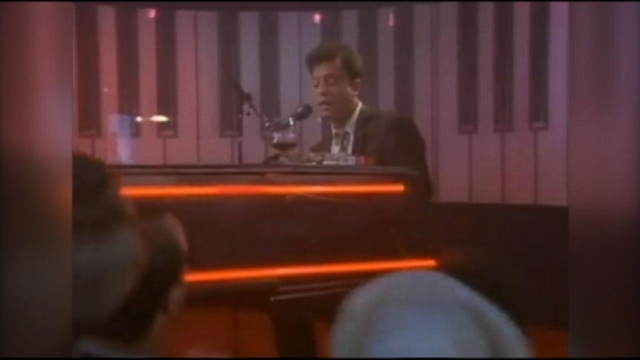
In one corner of the pavilion near the back of the sausage and peppers stand there was a small bar similar to the kind you would set up for a house party. It had just enough room for the bartender to set up a few spirits for mixed drinks and taps for a few beers. Occasionally a musician would set up a keyboard, a microphone and amplification in the opposite corner. I only remember seeing this piano player there once, but that one time was enough to leave an indelible mark in the shifting sands of my memories.
The Piano Man
My mom is a fan of Billy Joel. I grew up in an era when you would hear his songs on the radio often. We’re talking about that radio station that played “the hits of the 70s, 80s and today!” Mom played An Innocent Man on cassette in the car until we had committed it to memory. I found The Stranger, 52nd Street and Turnstiles in my parents’ record collection and played those frequently. I still like that music because it brings me back to that era. “Movin’ Out (Anthony’s Song)” is one of my favorite tunes of all time.
But I’m not a Billy Joel fan when that nostalgic connection isn’t there. I’m not sure when I first heard the song “Piano Man” but it wasn’t something we played in the house. I typically heard it played in my school in the band room. A young man who was forced to take piano lessons would one day discover the awesome power he had (a power Mr. Joel certainly found too): when you play the piano, chicks dig you. You have to play a current pop song or an old standard that has just the right appeal. Classical can work – Moonlight Sonata does pretty well. The young man would soon discover that “Piano Man” magnetized the female population. It satisfied the need for complexity and sincerity, demonstrating the player’s technical prowess and sensitivity.
I saw this work so well I wasn’t sure whether I should punch him or take lessons.
The song has a weird stream of consciousness that you rarely if ever hear in pop music. Released in 1973 as a single, it was written from Joel’s point of view as a former piano player in a lounge in Los Angeles. The characters mentioned in the song are based on real people and his encounters with them. I think the music sounds just fine. My issue is with the supposed sincerity. Yes, it certainly sounds heartfelt. Could it be, however, that his chord progression is tugging at your heartstrings and distracting you from the lyrics? The characters in the song – the old man, Paul ‘the real estate novelist,’ John the bartender, Davy in the Navy, the waitress practicing politics – are very distant from the ‘Piano Man’ and he seems to sing about them like he is better than they are, as if he too isn’t “sharing the drink they call loneliness,” as if there wasn’t “someplace he’d rather be.” For me, the worst line is near the end, where it is implied, via the line “man, what are you doing here,” that he is better than this scene and everyone in the bar knows it.
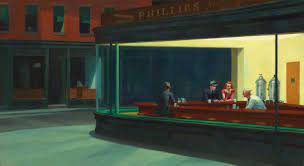
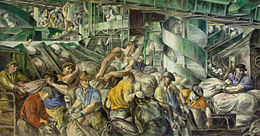
I’m a big fan of Tom Waits. He wrote songs about getting drunk in bars with strangers and employed the same setting: early 70s Los Angeles. But his early stuff was appealing because he was in the thick of it, singing from the gutter looking up, not looking down from a piano bench. Billy Joel treated his subjects like Edward Hopper, while Waits was more like Reginald Marsh.
The Eye Roll Heard ‘Round the World
I was in the middle of cleaning a melty glob of raspberry ice cream off of the hot brown surface of a picnic table when I heard a conversation between the Piano Man and the bartender in the corner of the pavilion. “What’s your name, man?” I didn’t quite hear the response, but I assume the bartender’s name didn’t fit the meter of the song, because the Piano Man then said, “Can I just call you ‘Mike?’”
I looked up to see the bartender shrug his shoulders and go back to cleaning the shelves under his bar. “That’s great!” said the Piano Man. “Mike it is!” I watched as the musician crossed the pavilion to his keyboard and got his sheet music ready.
The air in the tent was hot and stagnant, the smell of sausage and peppers ubiquitous and the crowd, always pausing briefly at a table before moving on, was disinterested. Yet the Piano Man maintained his pep. I tried to catch the eye of the bartender to see if he too thought the man was goofy, but ‘Mike’ saved his energy to exchange pleasantries with his customers and was dead-eyed otherwise.
At some point in his set, the Piano Man began to play Billy Joel’s “Piano Man.” This was it, his big moment. Families brushing past pushing strollers may have been oblivious but he had my attention. And then the lyric, the one he had carefully set up with the bartender beforehand, came: “Now ‘Mike’ at the bar is a friend of mine/ He gets me my drinks for free.” He verily shouted it while gesturing with one hand to ‘Mike’ in the other corner of the pavilion. But when ‘Mike’ heard this line he did not play along. He wasn’t show biz about it. Oh, no. I watched ‘Mike’s’ eyes roll so hard to the left and down I thought they’d roll out of his head. In my mind I feel like there should have been a sound effect for this story when this happened, like maybe a bowling ball slamming into a gutter as soon as it was released from the bowler’s hand, the pins collecting dust in the distance. ‘Mike’ turned his back on the Piano Man and went about his business.
Coda
I pitied the Piano Man. While I might have been holding a slop bucket and a rag, I knew I wasn’t coming back the following year. He was an adult who could be playing any music he wanted, anywhere he wanted, and he ended up in this place. The Piano Man, who had probably been the guy in high school getting chicks with his piano playing, was having a good time and it was crazy. I had been playing trumpet for several years at that point and had done small concerts for faculty parties and board of education events via the jazz band. I know, pretty fancy. What I’m saying is, at fifteen the glitz and glamour of ‘show business’ had worn off. Here was a guy twice my age acting like he was playing the Garden.
But did the Piano Man quit? Did he lose confidence? Quite the opposite. He sang the shit out of that song until the last line, which is “Man, what are you doing here?” But while Billy Joel was destined to put out much better material in the years that followed “Piano Man,” this Piano Man was never asked that question. Why? No one doubted that this performer belonged in a stuffy hot pavilion behind a sausage and peppers stand for two weeks every summer.

 Shored#Bitless