Short Stories

Rolling in the Deep

            There was once a beautiful building by the bay, one that gleamed a bright brown in the sunset hours. It did no harm to anyone. Generations of New Yorkers lived inside it, from the 1920s on. The building housed talented artists, criminals, boys and girls, women of science, men of letters, grandmas of warm cookies, uncles of ill repute, and cats (but no dogs because they were not allowed).

            Through no fault of its own, the building was sinking. As it sat in Manhattan, the city itself was subsiding, as it had since the last ice age. Scientists said that the Great Sinking – as the building preferred to think of it (if it could be said that the building had any thoughts) – had been occurring at 1.6 millimeters per year. And for over one hundred years the sea levels were rising. This had been the century of decline, literally.

            The beautiful building was sinking into the bay and nothing could be done to stop it. Engineers had their hands full with more pressing matters, like pumping water out of the basement of the nearby hospital. Firefighters were farther inland, setting up a new elementary school. The police focused on directing traffic away from the flood zone.

            To be forgotten about could hurt anyone, and if it could be said that buildings had feelings like people and dogs, the building would feel hurt. But little did it know it would soon fall victim to Cupid’s arrow.

            The octopus is known to be the most intelligent invertebrate of the sea. There are more types than humanity could ever dream; sneaky mollusks that they are, they have maps to the deepest, darkest ocean spots ingrained in their minds. In short, what man knows of the octopuses is but the tip of the octopi iceberg.

            The largest octopus could not enter man’s thoughts without causing panic, for it is a creature that takes up all the shadows and all the darkness man can imagine. If one true monster exists at the depths of man’s consciousness it is the Giant Octopus, not because it is specifically lethal to man but because man is in no way a threat to it. Man has discovered the giant Pacific octopus, which can grow up to 30 feet wide and weigh over 600 pounds. Impressive, but a mere flea compared to what lies beneath where light can reach.

            If it is possible for a building to have feelings, can it cry out in pain or sorrow? If so, we know that sound travels faster in water than in air. Did the Giant Octopus hear such a cry? Is that why it turned its slit-shaped eye in the building’s direction? And if a building can have feelings, can the Giant Octopus move out of the shadows to take a closer look? And if all this can happen, why can’t Cupid’s arrow ricochet off the building’s facade and shoot into one of the octopus’ three hearts?

            Yes, there was love brewing in tres corazones. Yes, warm feelings were crackling in the hearth of every apartment on each floor. As the building sank, the Giant Octopus rose to meet it

            As Cupid’s arrow was finding its marks, there were residents of the building who were falling out of love. As they saw their floors tilt and their walls buck, they thought, I’m coming out downside wrong on this deal. It’s time to split. Falling out of love with your place of residence is better than falling out a window of your sinking apartment complex. So, split they did.

            And that sinking feeling was all around town. Every New Yorker wondered who would be next. Who would go home to find that their dwelling had lost air like a flat tire. Who had lost some inches off their vertical like a ballplayer.

            Nobody really cared about the buildings themselves, just the stuff inside.

            The building that was sinking, the one that would soon fall head over heels, the one suddenly empty inside, was not an Art Deco masterpiece like its 1920s brethren. It was eight stories of plain, clean brickwork, and it let everyone walk all over it.

            The Giant Octopus was a loner by design. He wasn’t made to socialize. He didn’t know if there was another of his species around for a thousand miles, let alone a suitable mate. He had lived in the murky depths for so long, it seemed like darkness was all that existed.

            The fish that swam overhead never saw him, and the other octopi were snobs. No man would dare to sink so low, their vessels not able to manage the pressure.

            The Giant Octopus spent most of his life in blackness because he thought he deserved no better. Then he simply looked up and saw his love slipping down towards him. He knew he wanted more.

            When the first tentacle wrapped around the base of the structure, people saw it and remarked, “What?” Their interrogative had a tone of incredulity. In other words, they couldn’t believe what they saw.

            There are videos on social media labeled “sea monster dragging building down NYC,” “giant squid attack in Manhattan,” and “Loch Ness on East Coast.”

            People talked about a monster destroying their beloved building, the one they neglected to paint for decades. The one with cracks in the foundation. With holes in the roof.

            One thing that the building and the Giant Octopus didn’t know (and really, how could they?) is that this is the way everyone sees love from a distance when they know nothing. Someone is the victim of it, someone is the monster, someone is always dragging the other one down to their level.

            Would you believe that there were even older, more established buildings situated more inland that had a view of the entire romance? Would you believe that they looked down on the building and what it wanted? Can you believe that they judged it harshly, remarking that it was throwing its life away with this sea trash?

            An octopus arm can rejuvenate like a building floor can renovate. For so many years, the two lovers looked over the water at the same moon in the same night sky, separately, just from different angles, high and low.

            They had so much in common and they never knew it.

            Did the Giant Octopus reach out from deep, chilly waters into fresh New York City air, wrap its tentacles around the building and drag it down to its level, down in the briny deep? Or did the building, seeing the undulating cephalopod rising upwards in the moonglow, rush its own demise to meet it?

            Whichever the case, the lover’s clinch happened slowly. The Giant Octopus was tentative, holding its breath (both in nervousness and because it couldn’t breathe out of water). The building did everything slowly, and falling into its lover’s eight arms was no exception.

            They had plenty of time to back out if this wasn’t a sure thing.

            Much later, the people who didn’t get it and the fish that didn’t get it and the buildings that didn’t get it will see (either with their wall-eyed gaze or via photograph) the eight-limbed leviathan and the no longer pristine eight-story structure canoodling at the bottom of the ocean, eight tentacles weaving their way through eight windows on eight levels, the tips emerging from the opposite sides, a meshed embrace. Those fish and those people and those buildings will say they saw the whole thing: when they met, the initial connection, and the two of them rolling into the deep blue. And those fish and those people and those buildings will say that they knew it would work out all along.

Standard
Short Stories

Broken Crown

            On a warm summer night, Jack staggered through the door of the one bedroom shack quietly, or as quietly as the fifth of whiskey would let him.  He hung up the pail on the peg in the mantle over the fireplace and turned to the bedroom.  It was nearly pitch black and he had to remember where his ten-year-old son, Jack III, usually left his toys, but it was hard in the dark with his blood pumping straight whiskey straight to his brain.  He reached for the knob of the bedroom door, not noticing the sliver of light coming from underneath, but when he saw his wife, Jill, sitting up in bed, he wasn’t surprised.  This is how it always was. 

            Jill, with one eyebrow raised, asked for an explanation.  But Jack had given up long ago.  She was much better at reconstructing the events of the night without his help.  He stood there, his head back and his arms outstretched as if to say “I’m ready.  Let’s get it over with.”

            “Let me guess.  Tonight it was the dwarves.  They came by the distillation center, offered to take you out for a few at Beast’s Tavern.  I can tell.  I can smell the whiskey, and you only drink whiskey with miners.  I should have married one of them!  A steady job pulling diamonds out of the earth.  They didn’t get caught up in the fairy tale of fame. They had their moment and went back to work, and now they’re all millionaires.  Well, the pigs must have come by too and talked you into eating cheeseburgers out of the trough.  As usual, you can’t do it right and you get slop all over your clothes.  Then you got rowdy and Beast himself had to throw you out.  Don’t try to deny it!  I can see the scrapes from his claws.”

            Jack was still standing with his arms outstretched, taking it, like every night.  He turned his right arm towards her to show off the wound on his elbow from Beast where the oaf had grabbed him.  Jack reasoned that Beast was always angry on account of losing his looks and losing his girl.  Rumor was she ran off with another prince to some place called Hollywood, but it sounded like that place was made up.  Everybody in town always said they felt sorry for him, but then he would come out of the back room of the bar to check a receipt or to talk to a customer or, in Jack’s case, to bounce someone out, and everybody took one look at his face and remembered why they hated him so much. 

            Jill wasn’t finished.  She said haughtily,  “Where’s your pail?”

            “I hung it by the fire.”  Jack’s voice was almost growling as he slumped into bed.  Why couldn’t she just leave it alone? he thought.  Every night it was the same damn story with her. 

            He laid down next to her and closed his eyes, rubbing the bridge of his nose.  She started going on her usual tirade about his behavior.  His mind began to drift back to the good times. 

            Jack couldn’t remember what life was like before he met Jill.  He supposed he did the normal things like playing with friends and tipping cows.  His father, Jack the First, had been a rich man.  He climbed a beanstalk and tricked some giant out of his gold.  Wound up with a good bundle, but he lost some in a settlement with the three bears who held him responsible for dropping that giant on their house.  But Jack’s dad had plenty left over and their family lived pretty well off compared to the rest of town.  In fact, he remembered, his father never had to work after that.  Jack Sr. went out every night around town telling the story of how he had beaten the giant.  It was a much better story than any other; way better than the one told by the girl with the red riding hood.  (Red Riding Hood was still around, no longer little, drinking every night, telling that same pathetic story, the riding hood now looking dark gray from years of wear.)  In the midst of a boring story, Jack Sr. would walk through the door of Beast’s and everyone would turn their attention to him.  The way they lined up with offers to buy him a drink.  And eventually he’d tell the tale.  Jack Jr. never tired of hearing it.  It was all he could remember of his childhood.  Well, that and the pail. 

            Jack forgot when and where he had found the thing and had no memory of his first trip to the well.  It seemed like something that had always been in his life, and when he was young, he had thought that was all he would ever do.  But then he met her. 

            Jill was a distant niece of Cinderella, and therefore still under the jurisdiction of that same fairy godmother.  This made her quite interesting among the girls in town.  Jack had noticed her, but hadn’t thought much of her.  But a funny thing happened when he was about twelve.  Some call it fairy dust, others believe it’s something called puberty.  After that, she became Jill

            Jill quickly became the woman of his dreams, replacing Snow White.  With those bouncy braids and freckled cheeks.  Oh, how he wanted her. 

            When Jack Sr. threw a party, most of the town was there, including Jill.  Young Jack watched her from across the room, wondering what she thought of him, whether he was good enough for her.  Jack’s mother, Goldilocks, asked him to take his pale up the hill for some water.  Goldilocks, who was always very perceptive, suggested to Jill that she accompany him.

            Nervous as he was, Jack felt ready to make the trip up the hill he had made over a thousand times.  They both held the handle of the bucket as they went up, not saying a word.  He walked very stiffly as he thought of a suave comment, something Jack Sr. would say.  What did his father say to his mother when they met, Jack wondered?  “How do you like your chair, how do you like your porridge …” and then added with a lascivious grin, “how do you like your bed?”  He could say stuff like that because he was Jack Sr., the giant slayer.  Jack, on the other hand, was nothing yet.  Suddenly, he remembered this new story he had heard, one about a land where things called machines do all this menial work for you and people sit in their living rooms all day watching a glowing box that told stories, and the people who lived in this place never had to worry about anything except getting pieces of paper with letters on them, and this place was called “college.”  Jack made up his mind to ask Jill if she had heard about college once they reached the well. 

            But they never made it.  Jack tripped over a glass slipper and fell down the hill.  Hurt like a sonofabitch, Jack remembered.  He never admitted it when he told the story, but falling down and hitting all those little rocks had been more than he could bear, and since that time he’s never gone up another hill.

            At the bottom of the hill on that fateful day, Jack lost his senses.  He knew he lost his senses because he said something like, “Ouch!  My aching crown!  I think it’s broken!”  It didn’t sound like him to use an archaic word like “crown.”  He was apt to say, “Oy!  My bleedin’ brainpan!” 

            Still dizzy, he felt a weight on his body and breath in his face.  Opening his eyes, he saw Jill, dazed and groaning, on top of him. 

            A decade later, as Jack stretched out in his bed, he smiled to himself as he thought, And that’s where the term ‘knocked up’ comes from

            “What are you smiling about?”  Jill was still there, still ranting about the same thing. 

            “You’re not thinking about that old story again, are you?  Jack, that happened ten years ago!  Nobody cares!  You walk into Beast’s with that pail every night, but does anybody ask you to tell the story?  No!  There is no story!  We fell down a hill!  Millions of people fall down all the time!  You think you’re famous because you fell down?  You’re not even that good at falling down!  You only did half the job and gravity did the rest, but you can’t accept it, can you?  Every night it’s the same thing . . . “

            Jack had become a master at falling . . . asleep.  Sleeping to the sound of her crazy talk.  “You’re not famous!”  “Nobody cares!”  “Throw the pail out!”  Sometimes she raved about this “gravity” stuff, one of her wacky ideas.  But he knew.  Just like his father, Jack was a living legend.  Whenever anyone in town fell down they thought about Jack, and Jill too, even though she didn’t want any of the attention.  Fine with me, Jack thought, as he slipped into sleep.  He dreamed of the box with the colored images telling his story, things called posters and t-shirts and merchandise, and a thing called “Disney.”  And he felt happy, as he always was, and as he always would be. 

Standard
Short Stories

Dulles

            The man in the stall next to mine hasn’t given a courtesy flush.  Neither have I.

            Nineteen eighty seven started out good.  Paul Newman won the Oscar for best actor for The Color of Money.  Prince put out Sign ‘O’ The Times.  That Iran-Contra thing was finally over and we could focus on the Democrats taking back the White House.  

            I feel stuck in 1987.  I feel stuck here.  I feel stuck.

            It started in 1960, the year I was born.  Really, it started a few years later, when I was too old for diapers and Mother made me go it alone.  

            Mother never let me stop till I was finished.  I couldn’t leave till I was done and if I did it badly, I had to do it over again.

            Like homework.  When I was in the third grade I had to redo my math problems.  She told me to finish my division problems even though they were already done.  I said I did the work just like the teacher taught me to.  Mother pointed to a problem and said, “Remainders are messy.”

            My father left when I was eleven, and I haven’t heard from him since.  In a fit of rage he hastily filled a few boxes with his possessions and split.  Father thought Mother nitpicked.  He said she was Miss Perfectionist.

            The guy next to me is talking about stocks over a portable phone.  They sound like good tips.  I’d make a few calls myself if I could get out of here.

            I met Molly when I was 25 and she was 22.  We fell in love.  Molly and I worked as computer programmers at IBM.  Molly had perfectly combed, chestnut brown hair and crystal blue eyes.  She and I made love on Wednesdays and Saturdays.

            And Mother didn’t know.

            I don’t know where Molly is now.  I hope she’s still out there, waiting for me.

            When Mother found out about Molly, she began acting strangely.  Calling me at  work, Mother would ask me to come to her house.  To shovel the driveway.  Clean the gutters.  Refinish the hardwood floors.  Polish the silver.  Wallpaper the walls, including closets.  Paint the ceilings.

            And if I didn’t do it right, I’d have to do it again.  I couldn’t leave until it was done right.

            Deja vu.  Repeat.

            Molly said that I was whipped by my Mother.  She said my Mother had instilled in me a “pathological tenacity” to serve her.

            I loved Molly and I still do and I think we could have gotten married.  Maybe we still can.  But I couldn’t stand the way she threw around these psychobabble nonsense terms like “pathological tenacity.”  Molly heard it all from a radio call-in show hosted by Shirley McCulloughssy.  All day and night it was “Shirly says . . .,” “That’s what Shirley’d say,” or “ . . . which is one of Shirley’s mantras.”

            I’m sure Shirley, or one of her ilk, is still making money by throwing around these sloppy musings on radio, on television and in print.

            But she had a point in that Mother was getting out of hand with her demands on my time.  When I was asked to do chores on Wednesdays and Saturdays as well, I knew a change had to be made.

            It made sense to stand my ground then.  Now, I don’t know.  1987 was a long time ago.

            That was the year I decided to propose to Molly.  I bought us tickets to fly to a little Manor in Amherst, Massachusetts.  I would take her on a horse-drawn carriage ride through the snow on New Year’s Eve.  And then I’d propose.  That was the right way to do it.

            I still have the ring in my pocket.  I take it out and stare at it all of the time.  I guess I should feel regret.  But I don’t.  I still feel that this is the right way to do it.

            During our ill-fated trip, Molly and I had a three-hour layover at Dulles International Airport in Virginia before our flight to New England.  To kill some time, I decided to do this new thing where you call your home phone from a pay phone and access the messages on your answering machine.  Very high tech for 1987.  (Not as high tech now, I’ve come to realize, as I’ve heard all sorts of beeps, bells and whistles emitted from the men sitting in stalls next to mine.  Full conversations.  Television shows.  Webinars.)

            A few messages were old.  Molly coyly saying, “It’s Wednesday night, and you know what that means …”  A few guys at IBM called with work issues.

            And then one from Mother.

            She said, “I called and called and there was no answer, so I called your neighbor, Mrs. Brown, and she told me you and that girl were taking a trip.  I can’t believe you.  You don’t tell your own mother where you’re going.  Don’t run away and abandon your mother like your father did.  That’s not the way to do things!  I don’t know what you and that girl are planning with your lives, but just know that I don’t think it’s right.  You should start over again with a new girl, the right girl!”

            I hung up the phone and proceeded to the nearest men’s room.  I entered a stall, closed and locked the door behind me, and prepared to defecate.  It seemed imminent.  I did what Mother taught me to do when I was two.  But I never seemed to get it right.  So I just … kept doing it.  That was December 30, 1987.

            A few years ago, someone dropped a copy of Rip Van Winkle on the floor of the adjacent stall.  God is funny.  No, I didn’t grow a 10-foot beard.  I kept a razor in my shoe – always on long flights.  Even if you lose everything you can still shave.  You can’t go into IBM looking scruffy.

            I suppose Molly left the airport a long time ago.  One day, when I do this right, I’ll marry her and have the right life.  

            I suppose my job at IBM has evaporated.  Not right, leaving without giving two weeks notice.  I’ve always felt bad about that.

            And about how Mother was abandoned again.

            I don’t consider this a waste.  No regrets.  This is just a long layover that will be over some day.

            When I do it right.

Standard
Short Stories

The Trial of Prometheus

A well-known scientist (some say it was Bertrand Russell) once gave a public lecture on astronomy. He described how the earth orbits around the sun and how the sun, in turn, orbits around the centre of a vast collection of stars called our galaxy. At the end of the lecture, a little old lady at the back of the room got up and said: “What you have told us is rubbish. The world is really a flat plate supported on the back of a giant tortoise.” The scientist gave a superior smile before replying, “What is the tortoise standing on?” “You’re very clever, young man, very clever,” said the old lady. “But it’s turtles all the way down!”

Stephen Hawking, A Brief History of Time

The Trial of Prometheus

            When I saw the mighty Zeus reading from Stephen Hawking’s A Brief History of Time I had to choke back laughter.  He seemed perplexed that a mere mortal could grasp the scientific concepts behind a few tosses of lightning from Zeus’ mighty hands over a few short eons.  As he sat back in his judge’s bench twirling his beard, Zeus’ furry white unibrow undulated in confusion over the top of the paperback.  Apparently, the king of the gods was a mouth breather.

            The gods of Mount Olympus were assembled in courtroom J-7 for my trial, the honorable judge Zeus presiding.  The magnitude of what I had accomplished over human history was laid out before him on a long table.  Brickwork, woodworking, numbers, the alphabet, yokes, carriages, saddles, ships and sails, drugs, precious metal mining tools, animal sacrifices and art.  (Fire, for safety reasons, was not present; in its stead, a small placard read ‘fire.’)

            Zeus slapped the book closed and shouted, “Prometheus!”

            “Present,” I said, glibly.

            Zeus shifted in his chair, ready to proclaim punishment or throw a bolt of lightning or both.  Hera, his sister-wife, knitted quietly next to him, apparently oblivious to these proceedings.  A few other gods – Apollo, Athena, Hermes – lazed about reading old Life magazines with titles that read ‘Man of the Century,’ ‘Most Beautiful Women in Hollywood,’ etc.  Aphrodite, goddess of beauty, was shaking her head while reading an article on Julia Roberts.  From her dewy lips I could almost hear her mumble the word ‘slut.’

            Zeus cleared his throat.  “Right.  What you see before me is that which you stole from me and gave to men.  I forbid, and you do.  It’s as if you want to be the supreme deity!”

            Groveling like a pro, I said, “No, Great One, only you could rule Olympus and Earth.”

            “No one?”

            “Of course not!” I exclaimed.

            “Not even this Jesus I’ve been hearing about?”

            Just then a scruffy looking man wearing simple brown robes and a golden halo floating above his head leaned through an open doorway into the courtroom.  “Did I hear my name?”

            Zeus, never one to share a stage, said, “No, not at all.  Heh, heh.”

            Pointing at me, Jesus said, “One of yours?”

            “Yes,” Zeus said, gravely.  “A trouble-maker.”

            “That’s why we keep it simple,” replied Jesus.  “Me, dad and the ghost.  And if needs be, we can consolidate into one.”

            “Isn’t that something.”  Rolling his eyes, Zeus gave a wave to Jesus.  “Well, gotta dole out the punishment, so . . .”

            “Sure, sure, that’s your thing.”  Jesus slipped out as quietly as he came.

            Zeus peeked over his shoulder to make sure Jesus was gone.  Seeing he was, the god grumbled something about ‘hippies.’

            This distraction gave me the opportunity to position myself between Zeus and a dead eagle lying on the table.

            Suddenly, I heard the god shout, “You can’t hide anything from me!”  There was a crack of thunder and a bolt of lightning hit me in the chest, slamming me to the floor.  The pain didn’t sting so much any longer.  I had spent so many eons bound to a rock having that same eagle devour my liver every day (which would grow back every night) that nothing so paltry as a bolt of lightning would make me cower.

            “At least after that bonehead Heracles freed you he later apologized.  ‘Sorry for killing your bird, Zeus, but it seemed like a good thing to do at the time, freeing Prometheus and all.’  Would it be so hard for you to apologize?”

            “For what?”

            “For what!  For what!  Pick any damned thing off the table!”  Zeus gesticulated over the artifacts before him.  “Just one apology and I will consider mercy.”

            I studied the items in an attempt to find something I regretted giving the humans.  Then it could be over.  Zeus just wanted one apology for me.  

            Without looking up from his magazine, Apollo, god of the Sun, offered a suggestion.  “How about yoked oxen?”

            Zeus said, “No helping!”

            Apollo sat up in his chair.  “Zeus, Great One, I just wanted to point out that yoked oxen is an easy one.  No gods ever used this technology, I believe.  Humans stopped using oxen over 100 years ago.”

            Zeus said, “Well, what do you say?  Can you finally apologize and be done with this?”

            I said the first word, I, and made the required mouth embouchure for the first syllable of ‘apologize,’ but the word stuck in my throat when I remembered Agrolios, a farmer in Crete who dug troughs in his land with a stick all day and all night for months.  Yoked oxen spared Agrolios and countless others from starvation.  “I … can’t do it.”

            Hermes, the herald of the gods, made the next suggestion.  “What about precious metalworking?  Think of all the evil that came from that.”

            I shrugged.  “But the good greatly outweighs the bad.”

            Zeus said, “And of course with metalworking comes … fire.”

            I didn’t think he’d even try that one.  He waited for me to say something, but I just stared back.  I would never apologize for fire.  He and I both knew it.  But if I said so, there was no telling what the father of the gods would choose as my eternal punishment, as he surely would not tolerate such insolence.  We stared at one another as the minutes passed.

            A quick knock on the chamber door came before a lean Asian man stepped into the room.  “Ah, I see you’re not finished yet.”  No one responded.  “It’s just that Buddha,” the man turned and gestured to a fat, jolly bald man standing in the doorway, “he booked this room eons ago, and, well . . .”

            Zeus, without losing eye contact with me, said, “We’ll be finished soon.  But while he’s here, may I ask Buddha a question?”

            Buddha said, “Certainly.”

            “What is the ultimate price of obstinance?” asked Zeus.

            “One’s life.”

            “And what if one cannot die?”

            “Then one has reached enlightenment through obstinance, and it is good.”

            “And . . .”

            “Om.”

            Zeus looked back to Buddha in disbelief.  “That’s it?  This is all the Great Buddha advises?  Om?”

            “Om,” replied Buddha.

            “You have nothing else to say?  Just om.”

            “Om, motherfucker.”

            Dionysus, Greek god of partying and insanity, raised his head from a pile of cocaine he had been sleeping on and said, “Not all of us Greeks are like Oedipus!”

            Buddha and the other man then departed.

            I said, “Zeus, all of these gifts helped humans in some way at some time, even if it was an imperceptible change or occurred long ago.  I can’t apologize for any of it because to apologize would be to regret.  I don’t regret what humans have accomplished.  They deserved these gifts.”

            Zeus, pointing to an inscription written above his throne, said, “Do you see here it says ‘Zeus’, right?  Does it say ‘Zanty Claus?’  I don’t give gifts, Prometheus!”

            “Which is why I had to do it for you.”

            “You had no right!”

            Putting down her knitting, Hera interrupted.  “What about the book?”

            “What are you rambling about now?” said Zeus.

            She replied, “That very book in your hand that you slam upon the table for emphasis?”

            “Yes, yes.  So what?”

            Hera gave her husband a tilted eyebrow that conveyed a message in a physical language that the couple had developed over eons.  In response, Zeus’ unibrow rippled quizzically, to which Hera redirected her eyebrow to the book and then to me.  Zeus quickly thumbed through the first few pages.  

            Finally, he turned to me as if I hadn’t just witnessed that exchange.  Attempting smoothness, Zeus said, “Prometheus, the metaphysical realities contained in this book were gifts that you bestowed upon humankind.  Only a few human decades ago, in fact.  I don’t suppose you’d like to consider apologizing for such a recent misguided gift.”

            “Why apologize now?  Who knows what will be accomplished in the future in the realm of astrophysics?”

            “You should apologize for this knowledge because it isn’t such a big deal now.  I mean, most humans don’t even understand this book.”  The crooked, unsure smile that spread across his lips told me that he didn’t understand it either.

            I contemplated an apology.  “Yes, I could say it.  Then I could be absolved of all wrongs.  And then what?  What about me?  What about the things I suffered for?  What will I be the god of when I apologize?”  Clearing my throat, I stated, proudly, “I am Prometheus, a word that means foresight.  I see a future where humans will use the tools I’ve given them, including knowledge of astrophysics, for the benefit of all mankind.  And thus, I see a painful existence for me.”  I saw a look of pride and admiration in Zeus’ eyes, but like my refusal to apologize, the king of the gods would never permit a kind word about me to escape his lips.

            Zeus said, “Look around you.  Go ahead.  We are the only ones left.  Humans gave up on us centuries ago.  Most gods are gone.  It’s just us now.  And why?  Because we exist as things for humans to believe in.  As long as there is skepticism, we can thrive.  But mankind, with its technology and science, pushes into the unknown until we are no longer necessary.  And that is all your doing.  You gave them what they needed to survive without us, undermining all the work I did eons ago.  And I just want you to admit that you were wrong.”

            I said, “Gods use technology to further themselves only.  That’s what I discovered about your precious rule long ago.  It is vanity.  Man uses technology to become like the gods, and in so doing destroys the need for a god, and ultimately proves the nonexistence of the god.  The god is in the technology.  I gave your power away to man long ago.”

            Zeus fumed.  Had he been more reasonable over the millennia this wouldn’t have happened.  Now he was being overtaken by younger gods who knew enough to stay away from the nuts and bolts of the universe.

            Zeus said, “Someday your meddling will kill even me.  But I still have time, and while there’s time I can still deliver your final punishment.”  And with that the king of the gods zapped me in the chest one final time.  

            I awoke in the place where I am now, a void, floating under the Cosmos.  Star systems and galaxies – the entire Universe in fact – was above me.  Next to me in the Nothingness was a box of turtles.  I was on the outs, the only living thing outside of Eternity, except for my slow, hard-backed friends.  I suddenly felt the urge to place one of the creatures under the universe, then another slightly larger turtle under the first.  So on and so on, descending into blackness.

            Eons went by before I figured it out.  By then my green column had stretched further than comprehension.  Zeus had given me a pointless, impossible task of stabilizing the Universe on the back of a turtle, turtle after turtle, until I reached whatever it is out there that I can rest the whole thing on.  Someday a human will discover that there is nothing outside of the Universe, that the Universe is all there is, and thus my column of turtles will be obliterated.  Perhaps I will cease to exist as well.  Zeus would likely be gone by then, too, and without him to rebel against, what would I be?  

            I was furious at first, being the victim of my own methodology.  Hoisted on my own petard, as the saying goes.  Taken out by the very knowledge I bestowed on mankind.  But as the eons passed, I softened.  You have to go sometime.  And this fate surely beats having my liver eaten out on a daily basis.

            Onwards and upwards.

Standard
Short Stories

Time

Circa 1995


            When we saw the back seat of Dave’s car, we started to laugh, until we realized that four of us had to spend an hour and a half folded into the glove compartment sized seat.  Lucky for him, Dave would be sitting in the passenger’s seat.  Mr. Georgini would be driving and Ben, Nora, Cindy and I would be in the back of “The Mighty Turismo.”  The Turismo was an awesome machine.  It stalled in the middle of intersections.  It released thick clouds of smoke into the air.  It trembled and began to fall apart at high speeds.  Regardless of all its eccentricities, we were still going to take it into the city to see the Mingus Big Band.  Since we were all jazz musicians and fans of jazz, this trip was almost a religious experience.  Charles Mingus hadn’t made songs; he had orchestrated adventures.  They had power, excitement, and danger in every turn.  Although Mingus was dead, his big band kept his music going.  It took me a long time for me to convince my parents that I should see them in action, but considering so well in school over the past 3 years, they eventually gave in.  Finally, via the Mighty Turismo, I would be able to see the Mingus Big Band.              

            “Hey Dave,” I said, “Did the back seat shrink in the car wash or something?” 

            “I told you guys not to eat anything this week.  You would’ve fit just fine.”  Dave hunched over, looking like an old magician, and said in a wise, confidential tone, “You see the mighty Turismo is a deceptive creature.  It’s giving you the illusion that it is small when in fact it is quite spacious.” 

            We were not fooled.  Ben and I sat by the windows with our heads tilted to the side to match the sharp angle of the window.  Nora and Cindy sat with their feet between the two front seats.  When the car hit bumps, we all hit our heads on the ceiling.  When we went over speed bumps, the bottom of the car scraped against the concrete.  When the Turismo struggled up hills, we had to pet the dashboard and say encouraging things to it.   

            We spent the first part of the trip listening to Mr. Georgini’s high school stories.  He and his friends would march in different directions in the marching band, play songs in the wrong key on purpose, and basically do everything else that he won’t let us do now.  He seemed very excited because as he told the stories, he turned his eyes away from the road to face us.  I kept trying to think of a story to tell about our high school experiences, but I couldn’t think of one.  I looked around at all the people in the car and thought of something we might have done together that would be interesting.  But the more I thought about it, the more depressed I felt.  I had a few classes with Nora and Cindy, but all of those stories would be about boring classes and boring teachers.  I knew Ben and Dave well, but we just hung out in school together most of the time.  It never occurred to us to do anything exciting, and if we did think of something there were always rules and consequences to fear.  So, as seniors with about four months left together, we were just beginning to live. 

            It was around ten at night and the streets of Manhattan were curiously quiet.  Cindy said that the city folk were intimidated by the Turismo so they stayed indoors.  We pulled up next to a car at a stop light.  Ben had the great idea to have a race with the guy.  The guys in our car all looked over and gave the guy in the other car an intimidating stare while Mr. Georgini revved the engine.  Cindy moaned and said “this is so stupid” and Nora just put her hand up by her face and remained embarrassed.  The light turned green suddenly, and we had the guy beaten for the first five feet.  Then he blew past us and settled his car down at the next stop light.  We caught up to him and tried once more when the next light turned green.  As before, the first five feet were ours, but the rest was hopeless. We continued this game for a few blocks until the guy in the other car had to turn off down a side street.  Dave said he must have been intimidated by the Mighty Turismo and had to scamper off in his cowardice. 

            We hit a pocket of traffic a few blocks from the club.  We were worried now because the time was running out and the line was expected to be long.  In addition to this, we were really starting to feel cramped.  Mr. Georgini was using his horn liberally.  Apparently, the cars around us didn’t like the music we were blasting because the dirty looks were as abundant as the rival sound systems.  The green lights were shorter than our fuses, and soon we were yelling at Georgini to use his horn more.  A cab cut us off from getting a parking space right in front of the club so Dave asked Mr. Georgini if he could shout obscenities at the driver.  After Georgini’s approval, Brain rolled down the window and shouted the word “obscenities!” to the stares of many passersby. 

            We circled the block a few more times, gave up, and went down two blocks and found a parking garage.  Opening the doors immediately, we exploded out onto the pavement.  We walked quickly down the sidewalk, but not quickly enough because when we entered the first room in The Time Cafe, we could see the line stretching all the way to the bathroom.   The wall facing the street was all glass and the city lights from outside bounced off the white walls inside the room.  The place was like a restaurant, with tables set upon on one end, a bar on the other and the whole place surrounded by plants.  It was a very bright, forest-like room and at first I was very impressed.  But then I started examining things more closely.  The men passed me by with blank, expressionless faces, plastic Ken-doll-like hair, and clothes that made them look like they just stepped off the cover of “GQ.”  The women looked too beautiful; almost like mannequins on display to attract patrons. 

            After spending too much time in the first room, the line suddenly moved along quickly.  I found out later that a group of about 15 people from Pine Bush were on line, but they left when they discovered that Mingus himself wound not be playing that night.  The next room I waited in reminded me of a brothel.  It was dark, smoky, and filled with lamps with little furry balls hanging off the lampshades.  We caught the end of the waiting line in this room.  I looked around and saw men and women lounging around on low couches sipping drinks and smoking.  We were being shoved and pushed around by people who needed to get to the other end of the brothel to “mingle.”  Two idiots behind me kept asking me if I was on this line because I had reservations, to which I replied ‘yes’ repeatedly.  A man on my left started hitting on a woman on my right as if I wasn’t even there.  I couldn’t believe these people could stand around and chat while an incredible event was about to happen downstairs.   

            Ben, who stood in front of me, turned around and said, loud enough for everyone around us to hear, “I don’t know if I’m going to be alright tonight.  Having tuberculosis is really starting to slow me down.”  After that we got a little more space.  Ben will say anything. 

            At last, after about an hour on line, we broke through to the ticket counter, paid, and made our way down the flight of stairs, down a dark hallway and into an underground room painted in dark colors.  It was dark and smoky and people sat around with drinks, but it wasn’t like the brothel.  The people in this room had something in common: they were filled with excitement in anticipation of music they were dying to hear.  They were an audience. 

            We were lucky enough to get a seat, and, even though it was towards the back of the club, at least it was facing the stage head on.  In reality there was no stage; just a section of the room filled with chairs and instruments with nothing to emphasize it but a few spotlights.  When the band settled into their seats, the whole club sat up, filled with anticipation.  A black man with dreadlocks, a wide-brimmed hat and a poncho stood up and introduced the band.  Mr. Georgini said that was Frank Lacy, but I called him Poncho Rasta Man, because he needed an incredible name to accompany all the amazing things he did throughout the show. 

            He started out playing the trombone while conducting the band, then moved to trumpet, then to flugelhorn, delivering magnificently deranged solos on each.  He even sang a song. The other soloists were also amazing.  They would start out with something mild, but as soon as the rest of the band came in with background lines, the soloist would explode, the energy from the band boosting him.  For one of the songs, the emcee introduced John Stubblefield as being an accomplished saxophonist who had played with Miles Davis in the past.  After everyone applauded, expecting him to take a solo, the emcee announced that John would be playing the tambourine during the next song.  After a burst of laughter from the crowd and a humble nod from John, the next song began.  Towards the end, Stubblefield put the tambourine down, picked up his saxophone, and took the most incredible solo I’ve ever heard.  He went on for several minutes, pushed forward from the energy from the band and the crowd.  At certain points he would stop and scream “Oh yeah!” in which the audience would scream in return.  After a while he closed his eyes and played the keys at the top of the saxophone with both hands and played the ones at the bottom with the inside of his raised leg.  The man was so intense, he didn’t even bother to stop to breath: he just played through his mouth and inhaled through his nose–don’t ask me how.  When Stubblefield decided to end the solo, the last song was over–too soon if you ask me.  We got out of our booth and headed to the door as we bounced around all the things we liked most about the show. 

            As we made it toward the door, Dave, who happens to be a saxophone player, bumped into John Stubblefield.  When Dave saw who it was, he said, “It’s you!” with his arms outstretched in admiration. 

            Stubblefield copied Dave’s expression and said, “It’s you!” in return. 

            Then Dave thought for a second and said, “Wait a minute, I’m nobody!”

            Stubblefield complimented Dave’s shirt, which said something like “Make Music Not Garbage,” and then we left.  This time I got the passenger seat of the Mighty Turismo. 

            I started thinking about how much fun I had and how it was stupid of us to wait until the end of our senior year to do this.  While on the subject of stupidity, I thought about how ridiculous high school is.  It’s nothing but a long journey with many pains and fruitless assignments and the final reward in the end is to get a few months with your friends before you graduate and never see them again.  You will see them again, of course, but they will be different.  You come back from college and see them over the vacations and you realize that you’re no longer a part of their present or their future.  You’re only a part of their past.  When I look back on high school now I don’t care about the grades I got or failed to get.  I only regret not spending more time with my friends, doing the things we enjoyed doing.  Time is the only enemy.  It will win in the end, but if you make the most of it, the beating won’t be so bad. 

            My thoughts were jolted by the sound of the Turismo’s stereo blasting the Mingus classic “Better Git Hit In Your Soul.”  I can’t say anything more than this: if you haven’t heard this song, your soul is lost.  The Mighty Turismo wasn’t much of a car, but the stereo was the best around.  It was the perfect way to end an evening where every minute was spent to the fullest.  It was quite an adventure:  it was powerful, it was dangerous, it was exciting.  It had style. 

Standard
Short Stories

In a Silent Way

His pain monster rides high in the saddle, on his shoulders, playing patty cake on his head, wearing the hair thin on his pate.  The pain monster pushes him into bars, barring his escape after a drink quenches his thirst.  When he’s done, the monster makes him stumble out under its scaled legs.

Sleeping is difficult with the rank stench of digested dreams in the air.  The man tosses and turns, tense in unconsciousness.

The man’s pain monster rides his mount all day with its paws placed directly over the man’s eyes.  He can look to the side and see garbage, sewage, leakage, but never in front.  The pain monster steers him down the path of seeing it all yet seeing nothing.

The man’s name is Alan, but the pain monster calls him “Grimm’s Revenge.” Like a thoroughbred racehorse. “Put $400 on Grimm’s Revenge to commit suicide in the 53rd year, 10 to 1 odds!” 

Alan doesn’t call the pain monster any name because he doesn’t know it’s there at all.  He just feels something on top of him.  But Alan is a realist — reason tells him these feelings come from the past.  The feelings follow divorce, which followed a bad marriage, which followed a good marriage, which followed being dumb kids.  He can look up to the summit of his life and see the slope that carried him down to the bottom.  He could look in any direction he wants and never see the pain monster.  It’s always out of sight, like shaving cream on the back of the ear.  The people who would have told Alan about the pain monster have been pushed away. 

Julie was with him a few years ago.  She was divorced too, and she had a pain monster.  The four of them double-dated.  Alan didn’t love Julie and vice versa.  They coupled, talked about how everyone else was a moron.  Their kind of happiness.

But the pain monsters couldn’t leave it alone.  They liked the action.  Julie’s pain monster bet Alan’s pain monster that Alan would propose marriage.  Alan’s pain monster greedily accepted and set Alan towards the right path.  Alan saw what he needed to see.  Not the good times he shared with Julie, but those times apart when he grew suspicious.  Not happy pictures on vacation, but all of those bridal pictures in Julie’s magazines.  What was she thinking when she stared at those pictures?

Should he test himself to see if he could do it again?  His ex-wife remarried.  She could do it.  Could he?

Alan never did propose.  But he thought of nothing else. Meanwhile, Julie was irritated, because by this point her pain monster was showing her Alan’s signs of willingness to commit:  a bank brochure about joint accounts, less time spent with his friends, etc.  Stasis drove them apart just as shared discord attracted them.

Alan was alone then.  But was he ever truly alone?  Why, pain monster, what a big gut you have!  Who better to drink with, my friend?  Why, pain monster, what terrible fangs you have!  How do you think I suck your life force, Grimm’s Revenge?  Why, pain monster, what big eyes you have!  All the better to see the world for you!

There is only one thing Alan does now and then to stop this thing, though he has no idea how much it helps him.  Photographs show us the instantaneous moment of happiness, and the good pictures are genuine – nobody needed to be told to smile.  

He still keeps a few shots of his wife when they were so young that they were other people.  They had different skin, and walked and talked like strangers.  And they were happy.

Alan is most fond of a picture taken of himself and Julie in Virginia Beach.  It was their first trip together in Alan’s brand new Mustang convertible.  A new girl and a new car.  Happiness could still come.  

When the drinks finally hit and his eyes relax, the pain monster steers Alan’s gaze away from Julie’s smiling face to the rear end of the Mustang to the axle that snapped, to the backseat where they had that dumb fight, to the transmission that fell apart at 40,000 miles.  Suddenly, he regrets all of it – the vacation, the car, the girl, the life.

And the pain monster wins again without making a sound.    

Standard
Short Stories

Such A Place As This

from Purgatory: Five Years in Cleveland, a book by ME!


            A knock at the boss’ door was not taken lightly.  It was as if he was the Supreme Being himself.  I was hesitant to bother him at all.  It was such a trivial matter, but one that hadn’t taken care of itself.  And I surely wasn’t the one capable of willing it away.   

            “Come.”  The guttural voice inspired both fear and respect.  He was seated at a modest desk in a cramped office stacked with contracts waiting to be filed.  A fiery horizon burned through the windows and cast a reddish glow on everything in the room.  The boss’ skin, too, had a reddish quality and I had always wondered if he had been born that way or if it was a condition brought on by the intense work in such a place as this.  It seemed like the boss had been here a million years, but it had probably been only half that long. 

            “Sir,” I began, “there is a problem with one of the new people.  He isn’t showing the  . . . desired reaction to his daily routine.”

            Even in a chair, the boss cut an impressive figure.  He leaned back exhibiting a massive upper body and a cliff-like brow.  His eyes burned right through me, making me feel small and weak. 

            The boss growled, “Lionel, is this my problem?  You see the work I have to do.”  He swung his arms wide to gesture to the stacks of contracts that needed his authorization.  His wingspan was an impressive ten feet. 

            “Sir, I do appreciate the work you are doing, as do all of my colleagues.  You taught me everything I know.  You are beyond all criticism.  I do not come to you to complain or to raise issues.  I acknowledge my limitations, sir, and I come to you for help.”  That was the way, I thought.  Admit your weakness.  He likes that.  

            Stroking a jet-black goatee, the boss considered my plea.  “Very well, Lionel.  I will speak with him.  I can still inspire the proper reaction in my new recruits, eh?”  He raised his eyebrow and looked in my direction.  I nodded nervously in agreement. 

            I left to fetch the necessary files from the cabinet down the hall.  Peering over the railing of the fourth floor I scanned the crowd on the first floor for the young man I was so worried about.  I found him leaning against a wall with his hands in his pockets.  He stared off into space, completely unaware of his circumstances.  The fire was burning all around him.  The young man nonchalantly checked his watch, as if time meant anything here.  In such a crowd as ours he still stuck out like a bloody thumb.   

            “Thomas Kurtz, please report to the boss’ office. Thomas Kurtz, please report to the boss’ office.”  There could have been thousands of Thomas Kurtzes in that crowd, but they all knew which one the boss wanted to see.  The young man barely shrugged when he shoved himself off of the wall and slumped over to the elevators.  He had no idea what he was about to encounter. 

            I sat across from the boss.  Kurtz was marched into the office and he sat in the chair next to mine.  He looked around the office only momentarily, and then simply gazed out the window with a blank expression at the fiery sky.   His countenance didn’t portray stupidity or catatonia.  Though I knew it was impossible, I couldn’t help but think that the man seemed bored. 

            It was the same look he had when I had first put him on the rack.  Then I had moved him down to Layer Seven to slow roast over a bottomless pit.  I swear he had his arms folded across his chest as he dangled there for two years.  Then I had to get serious.  Disembowelment.  Decapitation.  Peeling toenails and fingernails.  Slugs.  Rats.  Snakes.  Spiders.  Bullets.  Rocks.  Spears.  Kurtz never reacted. 

            “Lionel,” the boss said, “why don’t you leave us.  Mr. Kurtz and I have a lot to talk about.”

            “Sir?  I just thought I could prepare the gentleman — ”

            With a quick look the boss cut me off.  In his eyes I saw horrible acts that I had never imagined and felt terrible emotions that threatened to destroy me.  I looked away, squinting in pain.  Arising, I put my hand on Kurtz’s shoulder and wished him luck.  I knew that what I had just seen in the boss’ eyes was just a glimpse of what this young man had in store.  Kurtz looked up at me blankly.   

            To take my mind off of Kurtz I went down to the seventh floor.  It was my favorite spot to people watch.  There were three rooms side-by-side that I observed from a viewing area.  One of our managers led a new man past all three rooms and made a gesture for the man to take a look into each one.  The first room was filled with rabid dogs, wolves and coyotes.  At the center of the room, four people – two men and two women – were bound to a large wooden column.  The animals attacked these people, tearing away chunks of flesh that grew back only to be eaten again.  The people had their mouths wide open, screaming.  The new man moved on to the second room where about 50 people were clawing and fighting each other to reach a cell door key suspended from the ceiling.  They were equipped with various tools, including sticks, shovels and ladders, which they were using to fend off their competitors.  Any time a person got close to the key the others would knock that person down.  The third room was half filled with feces, and one man and two women stood waste deep in it.  They were sipping coffee from coffee cups.  They chatted with each other and smiled.  The new man, who had breathed a sigh of relief upon seeing the third room, looked to the manager and pointed to his choice.  This man was admitted to the cell where he waded into the pool of filth and greeted his cellmates.   The new man, in order to break the ice, told the following joke to his cellmates:

            “A man dies and goes to Hell where he is greeted by the devil:

Devil: Hey, why are you bumming out?

Man: If you died and went to Hell, you’d be bumming out too.

Devil: Hell isn’t what you think it is. It’s fun down here. Say, do you drink?

Man: Sure, I love to drink. Why?

Devil: Well, you’re gonna love Mondays because on Mondays all we do here is drink. Hell, we have whiskey, tequila, rum, vodka, all the booze you want to drink. We drink ‘til we puke, then we drink more.

Man: Ah, that sounds great.

Devil: Do you smoke?

Man: Damn right I do!

Devil: Cool! You’re gonna love Tuesdays. We get the finest cigars from all over the world. Smoke all you want. You don’t have to worry about getting cancer because you’re already dead anyways.

Man: No shit!

Devil: You like gambling?

Man: Hell yeah!

Devil: Great! On Wednesdays, we have gambling night here in Hell. We have poker, slot machines, roulette, craps, black jack, horse racing.  You name it, we got it.

Man: My wife didn’t used to let me play poker.  

Devil: Now you can. You like to get stoned?

Man: I love getting stoned! You mean…

Devil: That’s right man, because on Thursdays, it’s stoner night here in Hell! Help yourself to a huge bowl of crack, smoke a joint the size of a nuclear sub, do all the drugs you want and you don’t have to worry about overdosing because you’re already dead anyhow.

Man: Awesome! I never thought Hell was such a swinging place!

Devil: Are you gay?

Man: Uh, no.

Devil: Oooh, you’re gonna hate Fridays!

            The three cellmates laughed at the new man’s joke and they all sipped from their coffee cups.  A minute later a guard tapped his night stick on the third cell door and said, “Coffee break’s over, get back on your heads.”  Going down to the seventh floor and seeing things like this always made me feel better. 

            I rode the elevator back to the fourth floor.  As I approached the boss’ office I heard him faintly say, “Lionel, could you come here please.”  It didn’t sound like the boss.  The voice was much more earthy and worn.  It sounded downtrodden.  It sounded human. 

            I entered the office and closed the door.  The boss stood by the window looking out to the blood red horizon.  He had poured himself a drink and was gulping it, keeping the bottle in his other hand.  I watched the boss slam two glasses of whiskey down his throat before he spoke.  “I saw Kurtz’s file.”  The file was on the boss’ desk flipped to the first page.  “I don’t suppose you remember his background?”

            I truly didn’t remember anything strange, and I said so.  The boss countered, “You may not remember, but you saw it.  You inspect all the new files.  You looked it over and then looked it over again when you noticed his . . .  problem.”  The boss gulped another whiskey, then added, “His problem that is now our problem.” 

            “I don’t understand.  His file is just random facts about his life.  That shouldn’t have any bearing down here.”

            The boss turned at last and I saw grief in his eyes.  His shoulders were heavy and he slouched over his desk.  Picking up the first page of the file, he read, “ ‘Kurtz, Thomas Frederick.  Born 1976, New York, New York.  Died 2001 in …” 

            The boss didn’t continue but somehow I knew the rest.  It came back, the memory of reading the location of Kurtz’s deathplace, a small insignificant detail, but a detail that threatened to unravel all the work the boss had done for so many eons. 

            Died 2001, Cleveland, Ohio.  The problem with torturing a New Yorker who moves to Cleveland is that no supernatural hellish torture compares to the one the man put on himself. 

            The boss said, “After I read this first page of the file I knew it was over.  No interrogation was needed.  I simply asked, ‘Why?’  He said, ‘A woman.’”  The boss slumped even lower.  I poured myself a drink and another and another and my boss and I sat in his office drinking and saying nothing.  Later, the boss decided that Thomas Kurtz should be returned to Cleveland to suffer more in the mortal world.  Reanimation was usually done for those wrongly sentenced or for contracts that turned out to be invalid.  This was different.  Kurtz could not exist is such a place as this.  And we didn’t want him. 

            As a final comment on the Kurtz issue, the boss pointed his index talon to the immortal plane above and said, “And if the competition has a problem, tell them they can have him.  I’d like to see what they come up with.” 

Standard
Short Stories

Sanka Joe

Dedicated to the memory of James R. O’Herron


“One learns survival by surviving.” – Charles Bukowski


Part One:  1 to 3

During the first month, no one took it seriously.

It was just a little of the white stuff on the ground.  Cold, wet, familiar.  Destined to melt in a day if not in a few hours.  It was merely snow, we thought.  Snow on the first day of summer.  It was preposterous.

*

I didn’t blink at six inches.  At one foot, I still ignored it, sloshing through it and stomping it off like it was a dream once I went inside. 

But all anyone could talk about was how the world had gone crazy.  People stayed indoors and played video games or watched TV.  They wrote social media posts about how crazy it was.  Then board games came out.  Skype calls to stay in touch with distant relatives.

The whole time, the snow kept coming down.

**

When my wife Marcy was still with me, the in-laws would call in winter to catch up.  That’s the only other time in my life that I can remember people talking so much about the weather.  Marcy’s parents lived in Toronto, and she had a brother in Buffalo and an aunt in Rochester.  Someone always asked, “Did you guys get the kind of weather we got here?”

Sometimes the snow got so bad that the State of New York had to shut down the Interstate.  In these situations the governor tells people to stay put.  Order in place, I think they called it.  The state troopers still caught people running out for one last thing.

What happens when you drive in that much snow?  The accumulation is too much for you to drive over and it comes down too quickly for the plows to remove effectively.  So you park your car, thinking you’ll wait it out.  If you keep your engine off, you’ll likely freeze to death.  If you keep the engine on, the snow can clog the exhaust pipe, which causes carbon monoxide to fill your cabin, which puts you to sleep before it suffocates you.  If you leave your car, you risk getting hit by a moving vehicle or becoming disoriented and walking in circles due to low visibility.  Aside from these concerns, there are also dehydration and starvation to consider.  I’m sure many people perished thinking they were going to be saved.

****

I watched the snow come up to the top of the front steps to my house before I did something about it.  I dug out a path in thigh-high snow to the shed, opened it and tried to start the snow blower.  It wouldn’t start.  It was relatively new, which is what was so puzzling.  I was missing that plastic key that you have to stick it into the ignition to separate the connectors, so I jammed a popsicle stick in there.  Imagine the absurdity of eating a cold, refreshing lime popsicle in such weather just to get your snow blower started.

The snow was above the top of the auger enclosure, so a lot of it piled on top of the motor.  The machine sputtered to a stop on a few occasions.  Cutting one tract in the snow from the garage to the lamp post was arduous; from there to the street was just as tough.  As I reached the end of the drive, it flat-lined again and would not be revived.  Out of gas, I trudged back through the hip-high fissure to the garage to retrieve my gas can.  On my round trip, I thought about the snow accumulating even higher, so high that I would have a cavern to walk through, snow on either side ready to avalanche in and crush me.  The idea was simultaneously absurd and terrifying.

Clearing the driveway took hours, into the evening and later, so late that using the headlamp on the machine was essential.  I shoveled overflow snow just as much as I pushed the beast along, and all together the effort cost me six hours.  But it had been in the low forties during the day and in the mid thirties in the evening, and I thought the weather was pleasant enough given the situation.

I was surprised to see in the morning that the town hadn’t bothered to plow the street.

********

That was the turning point as I later realized.  It was the time when the government and the media stopped telling us that it wasn’t a thing.  At first they had said, “This thing is only temporary.”  “It’s a thing that was coming, we knew about it and we know it will cease.”  “The important thing is to not panic about this thing.”

Then they changed their tune.  The ‘thing’ became an ‘it.’  “This is just how it is now.” 

And it kept snowing.

****************

You’d think that a person would run out of food, and I’m not sure how many people did or didn’t.  My method in the early days was to buy groceries often.  When it started, I casually tossed a few extra duplicates of my normal selections.  Six cans of tuna instead of three or four — that sort of thing.  At one foot of snow, I decided to do an inventory of what I did and didn’t have in my cupboard, and was sure to pick up one of everything.  You wouldn’t want to be a position to need another cup of brown sugar in that weather.  Hence, my spice rack became clogged with things I would never use, like tarragon, herbs de Provence, and cream of tartar. 

At two feet, you had to get the basics of survival in a first world crisis:  bottled water, toilet paper, medicines, cleaners and such.  These things became scarce, as did chicken, beef, eggs, canned goods, and dry pasta.  I had the foresight to stock my chest freezer with turkeys, cuts of beef, chicken breasts and pork loin in the early stages.

When the third foot of snow fell, I drove my truck down to the end of my newly snow-blown driveway (which was quickly accumulating more snow).  My street hadn’t been cleared yet, but other cars had made enough of a path that I could follow the trail downhill on my street, Fire Hill Road, to the Stop and Shop.  I only went at that point to see what it was like.  The insides were all cleaned out and no one was shopping.

But outside in the parking lot men and women chatted in circles, and children played in the snow.  The adults talked about how crazy this was.  There was a lot of laughing.  The kids threw snow balls. 

I sat in my car with the window open and the radio on, just loud enough to make it clear I wasn’t a creep, but low enough to hear what they said.  (The radio was playing Modern English’s “I Melt With You,” a song that was experiencing a resurgence in popularity.)

One of the adults standing in the parking lot said that there was no way the schools could open in September if it continued, and a man who said he worked for the Board of Education agreed.  The kids cheered and ran up a snow bank at the thought of no school and eternal, constant snow. 

The adults chuckled at their children. Through their laughter I could sense their fear.  None of them wanted to go back to their homes and live under the white menace alone, staring at the news coverage in disbelief.

As I drove home, I noticed there was a sign at the end of a several driveways that had a picture of a hand holding a bouquet of flowers.  Underneath the picture were the words “Flowers for Plowers.”  The backs of the signs had the words “Plower Power!” in a bright blue font underlined in red.  At the time, I thought that was a little excessive, especially since the plows were not running.

The following day, the plows began clearing the roads on a twice daily basis.  The snow was consistently falling, 24 hours per day, dropping between 8 and 12 inches.  Much of the snow melted when the sun was out, creating a slushy mess that would freeze when it went down.


Part Two:  4 to 6

My surname is Kim and I am a Korean American.  My family immigrated to this country from Japan shortly before I was born.  We spoke English and Korean in the home; however, I can’t speak Korean unless someone else initiates a conversation in that language.  It’s as if the language is buried deep within my subconscious. 

I had a career as a public high school science teacher.  I retired after 30 years and have not worked since.  It was an honorable profession, but I don’t have contact with those colleagues and friends any longer.  I suppose I haven’t kept in touch because I feel as though I had the best possible experiences with them back then, when we were young and energetic and the kids drove us nuts but we could imagine their potential.  ‘Now’ is filled with end times.  If I chose to, I could simply sit in my home, check obituaries and gossip, and wait for oblivion.  But I can’t do that.  I watched my mother do something similar when she waited by the phone for news from relatives in Japan.  She was worried sick if her mother or sister was ill; she prayed for my cousin when he wasn’t doing well in his studies at university; and every year she made me sing “Happy Birthday” over the phone to my grandfather, a man I’d never met.  And then, the phone calls stopped.  There was no one left to worry about.

My mother didn’t want to come to the States as much as my father did.  He was a Korean living in Japan, a situation that was untenable for a man who had ambition and didn’t want to be treated like a second class citizen.  In the US, he reasoned, he might never become the president, but the public would see that he had something of value for them.  Even if they distrusted outsiders as much as the Japanese, the Americans would recognize him for his struggle and reward him with their business.  His friends regaled him with stories of the Americans flocking to Korean barbeque, Korean nail salons, and Korean Tae Kwon Do schools.

The stories kept my father optimistic about the American experience, through failed businesses, lost fortunes and racist graffiti.  Due to his persistence, he managed to become a success, winning far more than he lost.  My childhood was idyllic because of it.  I wanted for nothing.  I had friends.  My family travelled some.  I was very happy. 

That’s why I’ve fallen out of contact with my parents.  When they returned to Japan as successful elderly people, they could hold their heads high in a country that was more accepting of them.  I mourned them when they left, knowing it would be the last time I would see them.  Like my teaching career, a golden era had been brought to a close and I was able to recognize it, appreciate it and release it.

My parents built a house in Tsunan, Niigata Prefecture, an area referred to as “snow country.”

********************************

I attended Buffalo State University, where I met Marcy.  She and I had little in common at first blush, and I think that’s what drew us to one another.  Each of us was looking for a new perspective.  Marcy was technically an immigrant (her family was originally from Canada), though she had no trouble fitting in when she moved to the States.  I was born in America but was raised by immigrant parents, and many people eyed me with curiosity and suspicion; thus, I often felt uncomfortable here.  What I remember from our early dates were our conversations, which could last until dawn.  She was a thin brunette with freckles who would wrinkle her nose before she laughed, which was usually after I made some matter-of-fact comment that she didn’t agree with.

When we decided that we would continue the relationship after college, I recall that it was a cold day and we were shifting from foot to foot and rubbing our hands together, probably waiting to be let into an early practicum class.  I asked, “Where are we going to go after we graduate?”  She said, “I don’t care where you take me.  Just promise me it won’t be farther north!”

Marcy and I both became teachers.  I taught ninth grade Earth Science, which was a survey of many sciences:  plate tectonics, geology, meteorology, ecology, and astronomy.  It wasn’t too difficult for most students to grasp as we weren’t exploring anything at a deeper level as you might in Chemistry, Biology or Physics.

Where I was content to start my teaching career right away at that level, Marcy sought a much harder path.  She pushed herself through additional work to achieve a PhD in chemistry.  She taught organic chemistry to college students who struggled through each chapter just as she did when she was an undergrad.  I would ask her why.  “You don’t understand,” Marcy would say, exasperated. 

I think she wanted to prove that she could teach the most difficult subject that she had ever studied; that, in and of itself, would be a feat worthy of her time and effort.

Marcy and I had a child named Zach.  He inherited a lot of my features, but he was thin like his mom.  Everyone thought he would be a school teacher too, so he surprised us when he became a pharmacist.  He took an internship in Denver after college and liked the city enough to stay there.  Zach was forty and living in Denver when the snow began to fall. 

****************************************************************

Marcy and I had arguments that could not be resolved.  She decided to leave and return to Toronto.  I would have been content to move out instead so that Marcy and Zach could live in this house, but that wasn’t what she wanted.  The divorce was finalized when Zach was already a freshman in college and living on campus.  I was suddenly alone, feeling that my lack of comfort and my loneliness was my punishment for not saving my family.

Over time I came to understand that the relationship had come to an end and changes had to be made.  My feelings were merely signs of discomfort about a new situation.  Marcy’s choice was valid even if it wasn’t what I had wanted.  I had to let go of her, as I will have to let go of everything one day.  It’s like that saying:  you can’t take it with you.  I’ve learned not to hold on too tightly to someone or something I’ll lose.  It just causes more pain when the person or thing inevitably leaves.

************************************************************************

********************************************************

As four feet became five feet and five feet became six feet, I believe many Americans were looking into their past lives and asking how it could have come to this.  I couldn’t have been the only one mired in self-reflection.

I sat and stared out the windows of my house in disbelief.  I remembered that Elon Musk had invented a flame thrower for no discernible purpose some years prior.  My new distraction became imagining torching my way from garage to street, blazing a path to my neighbor’s house, or attempting to tunnel up to the surface.  My scientific mind invariably stepped on the fantasy with questions, and the conclusion was always thus:  you would run out of fuel long before the snow curbed its incessant falling.

Six feet of snow against my Colonial-style home made life interesting.  Downstairs you felt trapped, with snow covering part-way up the windows, leaving the door to the garage as the only viable exit.  Upstairs still felt like normal life as long as you didn’t come too close to a window and look down.  It was a nice break from reality, and I felt sorry for the people in ranches and Cape Cods who would likely suffocate if they didn’t leave.

My twice daily chore became snow blowing in the mornings and late afternoons.  I ventured outside of the house every other day to feel regular, buying whatever seemed necessary.  Plenty of gasoline, plenty of food.  One time, I fishtailed going downhill on Fire Hill Road to the Stop and Shop.  That’s when I started going the other way to the state road and over to the Super Wal-Mart. 

Being a member of the scientific community, I sought an explanation for the weather, and what I came up with would’ve barely passed a ninth grade science class.  Here it is:  some places on Earth must be pretty dry for there to be this much moisture here.  Another thing:  the Earth might not be rotating on the same axis and thus isn’t angled to the Sun in the same way.  Global warming must also play a role. 

But here is the only reasoning that stuck:  this is just how it is now.


Part Three:  The Great Outdoors

I had maintained a one-and-a-half car width of a trail on my driveway for a while, but then the inevitable happened.  The twice daily routine of snow removal created snow banks that rose past my head, and soon they proved to be insurmountable for my machine.  The arc of thrown snow hit the top of the bank more often than breaching it.  Thus, I had to shovel-push the snow into the street. 

I recalled my old colleague, Mr. O’Herron, the physics teacher, and how he would have calculated the exact point in time when the snow bank ridge became impassable.  I could have used his help.  Not knowing if he was still in town, not knowing if he was alive or dead, I shouted his name, “O’Herron!,” over the racing motor, the same way I had done across the quad when we had rooms in the science wing.  It had been a little bit of a distraction, and not something anyone had expected to hear emanating from the window of docile, amiable Mr. Kim.  Mr. O’Herron would turn his head, smile and toast me with his can of Pepsi before returning to his lesson plans.

Giving up on the snow thrower was easy once I reasoned that the additional activity of shoveling snow three or four times per day would give me all the exercise I’d need to keep my strength up.  Daily snowfall amounts were only 8 to 12 inches, so I reckoned that it would be easy if I kept at it. 

When I was done I tried an idea that I had been formulating for a while.  I took some old lumber scrap pieces and trimmed them in such a way as to make a wooden box that was rectangular, about two feet long, ten inches wide and ten inches high, and open on one of the two small ends.  Starting at the top of the snow bank alongside the driveway, I pushed the box horizontally deep into the snow, cutting in and pulling snow out to dump on the road.  I continued in the space next to that hole by cutting in twice, one box next to my first hole and one beneath it.  Over and over I repeated the process, going one space lower than the cutout next to it, thereby forming a set of stairs. 

The “staircase” in the snow had to be packed down, and I had my doubts that it would truly hold my weight.  I pressed it down with the box to maintain the step’s correct dimensions and found that only the first few inches needed compaction; that which lay beneath was already compressed under the weight of the snow above it due to the daily melting and refreezing that occurred.  Day by day, I packed down the new snow.  It gave me something to look forward to.

************************************************************************

************************************************************************

************************************************************************

****************************************

One day the surface iced over, which gave me my opportunity.  The staircase would hold, I believed, and if it crumbled beneath me it would only prove that I was as incompetent at construction as I was at physics.  The snow stairs did hold my weight, however, and soon I was standing on the highest snow bank that I had ever summited. 

A Facebook message had been circulating for a while about a weekly meet-up at the fire station down the road.  It was for locals who needed help or information, or just wanted to socialize.  I intended to go in person to inquire about the continuation of snow clearing and to hear other information that might be pertinent.  If I would eventually be snowed in, I wanted to know when and for how long so that I could stock up on supplies.

The problem was the sharp curve of Fire Hill Road.  At that point, in my opinion, only a four-wheel drive vehicle in low gear riding on the best snow tires could be trusted to handle the bend without spinning out and tumbling over the edge into the river.  I had an old four-wheel drive truck with so-so tires that had fishtailed when the storm was in its infancy.

How far was it to the fire station?  Two miles?  Walking the road would have been preferable to going over land.  But the roads were down to one lane and the cars might not have seen me in time due to visibility being limited by the high snow banks.  The roads looked like the luge at the Winter Olympics, which didn’t seem hospitable to pedestrians.

After minutes of searching the garage for a sled I realized we hadn’t owned one since Zach was a child.  No pool floats, no skis, not even tennis rackets that could be fashioned into snow shoes.  I looked all around the house for something suitable to glide across ice-covered snow and came up with a large cookie tray that my wife had left in the drawer under the oven.  I took it outside and tested it on top of the snow bank.  This method was mediocre; the trip down the slope of the snow bank was fast but the tray didn’t allow me to glide very far due to its rectangular shape.  I remembered that I had a charcoal grill on my back deck that had a round cover.  I always found it cumbersome to hold while I flipped burgers and turned hot dogs, but it was certainly wide enough to hold my small stature.  The round shape seemed more promising for distance.

I had to go through my sunroom to the deck.  Opening the door to the deck, I allowed an avalanche of snow inside the room so that I could dig out the lid.  Outside, the snow was nearly up to the top of the door frame, but lucky for me the grill was close. 

After removing the lid’s handle with a screwdriver, I made a second test run down the slope of the snow bank and discovered that this sled would carry me farther.  However, I knew I would likely need to shove, throw or push myself along for a while before I could rely on downward momentum. 

What I was planning to do was frightfully insane.  I knew I could have hitched a ride on a plow to the fire station and hitched a ride back.  I could have called the town and asked a million questions over the phone, saving myself all this time and energy.  But after two months of cabin fever, all I had was time and energy.  I think I wanted to prove that this old man could perform the simple task of going from point A to point B alone, snow be damned.

I climbed to the top of my snow staircase and jumped into the lid, tucking my legs to my chest to avoid dragging them in the snow.  That bought me a few yards, so decided to use this method to travel over neighboring properties.  I tossed the lid down, jumped in and glided until I stopped.  Repeat.  I must have been quite the spectacle for anyone watching out their windows.  Whenever I saw a light on, I waved to that house as if to simultaneously ask for permission to trespass and to say thank you for granting me passage.

When I reached the cross street Mortimer Lane, I could see that the gradient of the slope was steeper up ahead.  But first I needed to cross the gully of Mortimer to continue across the yards that lined Fire Hill Road.  I coasted near the edge of the slope and was planning to climb down the western bank, cross the street and ascend the eastern bank.  I suddenly heard a whoop to my right.  I turned to see children and young adults playing in the snow.  Replete with snow pants, waterproof jackets, boots, wool hats and gloves, they were building snow men and throwing snowballs.  The teenagers had snowboards and sleds that they were riding down one snow bank and up the other side.  They turned at the crest of the opposite side and glided back across.  A half pipe, I believe it’s called. 

I instinctively waved like I did in my previous profession where I found it helpful to give a cheery wave and hello to the teenagers who interacted with me in the hallways in the morning.  Back then I did it to cover the fact that I couldn’t remember their names.  Now it was simply the joy of seeing joy, the happiness of witnessing unbridled play in the absence of dread.  More snow equaled more fun in their minds.

Something possessed me to allow the grill lid to continue coasting dangerously close to the edge of the half pipe.  It would be decided by fate, I reckoned.  Would I take the safe route on foot or would I be shot around like a pinball?  The ‘sled’ slowed down to a stop right on the cliff’s edge.  The critical tipping point was reached when I adjusted my legs just slightly.  Once gravity pulled me into the pipe, there was no option but to go with it and remain as aerodynamic as possible.  The downward ride was nothing different than my test run at my house.  The short glide across the one lane street seemed slow, and I felt disappointed that I might not make it back up to the top.  I should have remembered O’Herron, who would have joined me on my adventure and would’ve had more confidence in our momentum.  Up I shot to the top of the opposite snow bank where I was discharged from my craft into the white stuff.  I heard a whoop and a cheer follow my stunt, and I automatically waved again in case their approval was for me.

I climbed back into the lid.  Once I was ready, I pushed myself into a slow and steady glide down Fire Hill Road.  Still nervous about the part where the hill drops and bends, I took opportunities to practice digging my heels into the snow to stop myself.  There were also clumps of trees to work around and plowed driveways to cross.

My caution was for naught, however.  There was a driveway that I had to cross, so I attempted to stop myself at the snow bank that the homeowner had plowed.  My intention was to climb down and climb up on foot.  But the snow bank fell apart under my weight and suddenly I was thrown downward, traversing the snow bank and the driveway quickly, then crossing Fire Hill Road, smacking my face against a “Flowers for Plowers” sign, and running up the side of the northern bank only to be propelled further downhill and into the southern bank, which in turn “helped” me along in my journey.  There was no doubt that I would be early for the meeting now, I thought, as I held my breath and gripped the edge of the grill lid tightly. 

This is exactly what I didn’t want.  I had guessed that my truck would lose control down the curved slope ahead – that was the only reason for travelling by barbeque apparatus.  Now I was sure that I would be shot like a cannon ball over the snow bank and into the river.  What state was that in?  Frozen over, I hoped.

But I had no choice, so I went along with it.  Back and forth in the half pipe, careening downhill, I saw the curve ahead but not the river.  Everything was white.  As it turned out, a humongous snow bank had grown over time, probably from plows dumping their loads at the bottom of the hill at the bend before they moved on.  By the time I hit the curve I was travelling at over 30 miles per hour and spinning vigorously.  My craft did not go into the river, however, but slid around the curved wall of snow and to the left, following the bend in the road.

Once I was shot out of the “luge” I drifted to the driveway of the Fire Hill fire station.  I stood and stretched my tight legs and breathed a sigh of relief.  It had been an exhilarating ride.  I gazed at the size of the snow bank, feeling proud that I survived and glad that I wouldn’t have to do it again.

Near the front door there was a man smoking a cigarette, staring at me in disbelief.  He said, “Do you know how dangerous that was?”

He likely thought I was a young adult, but as I approached and pulled my hat off my head showing my advanced years, he stiffened, seeming puzzled.  When I asked about the meeting, he threw his thumb over his shoulder and said, “Yeah, the meeting room.  It’s past the garage.”  I noticed a truck and a compact car in the parking spots near the front door.  Other people had either come from another direction or risked driving down that hill.

I thanked him and proceeded inside.  When I passed the garage I observed that the bays were now housing snow plows instead of fire engines.  I stepped inside the meeting room, which looked to be a common area where firefighters could watch training videos, eat meals, play cards, etc.  On this night there was a circle of a dozen chairs set up in the center of the room.  I selected the nearest one and sat.

There was a white board facing me that had some information written in purple, loopy handwriting:  the plowing would continue twice daily as needed.  It also read:  number of plows:  six (four in operation for snow clearing, two rotated out for maintenance).  Then a list of plow drivers’ names and the number of their trucks for people who wanted those details.  Running down the side of the white board was a list of films for the weekly movie night at the firehouse:  Snow Piercer, Groundhog’s Day, Dr. Zhivago and Fargo.

There was a man wearing a cardigan sweater leading the meeting who introduced himself as Bill Montgomery.  Bill sat opposite me in the circle of chairs.  To my left was the smoking man who chastised me for my sledding stunt and to my right was a woman wearing a mail carrier jacket designed for cold weather.   Several empty chairs separated each one of us from the next person in the circle, so that if we were the face of a clock there would only be humans sitting at three, six, nine and twelve.

************************************************************************

************************************************************************

************************************************************************

************************************************************************

************************************************************************

************************************************************************

************************************************************************

********

“I wonder if we could all start by going around the circle and introducing ourselves,” said Bill.  “First, tell us your name.  Then perhaps you could give us your favorite memory of living in this area …”

Bill was a friendly man who meant well, but he had no idea the state of panic this put me in.  I’m uncomfortable meeting new people.  I hadn’t anticipated this being so social and had instead expected to see a podium and a very impersonal bureaucrat leading a press conference of sorts.  What would I say?  No memories of the last few decades stood out enough to warrant a mention. 

As I fretted, Bill went behind his chair and moved the dry erase board behind a staircase in the corner.  This revealed a poster on the wall of a Dalmatian dressed up in firefighters’ gear.  I immediately thought of the border collie puppy that our family adopted when Zach was around four years old.  We called him Zipper, which was my son’s idea, because he was black and white and the patches of white on his chest were somewhat mismatched in a way that looked like he was wearing a zip-up jacket when the zipper is out of place and the two sides of the jacket aren’t lined up right. 

I went first.  I introduced myself and, because I couldn’t think of anything better, I talked about how much I liked walking Zipper in my neighborhood when he was a puppy.  The other three smiled.  The smoking man was Elijah Turner, a man in his late twenties who ran a landscaping company in town.  He shared a memory of hunting deer with his father along the ridge.  Next was Bill, a fit man in his forties who did public relations for the town.  He shared memories of going Christmas caroling every year with his church group and how nice the residents were.  The last participant was the lady in the mail carrier coat, Laverne Bolton.  She had a boisterous voice that made her sound like she frequently told stories to entertain, and her attitude was infectious.  She told an exhilarating story from her early days as a mail carrier about rescuing a man from a burning house.

The meeting commenced and quickly proved to be a waste of time.  I think Bill’s role was to mollify the public, and in Elijah he had met his match.  To Bill’s statement that the government did not know what was causing this much snow to fall in a warm season, Elijah insisted that the government did know the cause and implied that Bill was in on it.  The young man was angry about losing his landscaping business; if there was no spring, he had no work to do.  Elijah said, “This is probably the work of the global warming hoaxers!”  Bill, clenching his jaw, asked, “How so?”  “Well, now that the snow is here, EVERYBODY is going to believe in climate change … isn’t that convenient?”  Later, Elijah asked why we couldn’t just use flamethrowers, and I had to stifle a guffaw. 

On the topic of moving everyone to a warmer climate, Bill told us that there were no areas in the Western Hemisphere unaffected by snow, and that Europe, Africa and Asia were experiencing similar weather (e.g., constant hail in China, blizzards in Russia, snow squalls in India, freezing rain throughout Africa).  It was a sobering picture, even though I had never considered running away.

During the meeting, Laverne looked over at me a few times, maybe because I was so quiet.  The mail carrier was a stocky woman with a blonde perm and blue eyes.  She looked to be in her fifties, yet seemed to be as vibrant as anyone decades her junior, perhaps due to the physicality of her job.  Laverne only spoke during the meeting to interject comments about how this weather would go away soon. 

At a point when Bill and Elijah were lost in argument, Laverne leaned over to me and asked, “Do you still have Zipper, Mr. Kim?”

I froze immediately.  I remembered something that I hadn’t thought of in many years.  Zipper had been a puppy, maybe four months old, and I was taking him out to do his business in the yard.  The dog had a habit of digging through the rhododendrons on the perimeter of our lawn; I allowed it because he was usually looking for a spot to relieve himself.  Sometimes he would get stuck, the leash twisted and turned through several trunks, and I would have to drop the leash, reach into the bush, grab his collar and guide him out. 

One night at around eleven I allowed him into a bush to relieve himself.  I was looking up at the full moon and appreciating the mature pine trees in the woods behind our house.  I couldn’t feel Zipper pulling at the leash any longer and I assumed he was stuck.  I dropped the leash and reached into the bush.  But it was too dark to see him.  I had forgotten my flashlight.  I turned to grab the leash again so that I could feel where he had gone, but the leash had disappeared.  The leash was bright red, but I couldn’t spot it in the moonlight.  I called to Zipper, but there was no answer.  I got a flashlight from the house and really searched the woods near the house.  Hours passed before I gave up.  In the morning, I had to calmly explain the situation to Marcy and Zach.  I said he would turn up, but he never did.

To Laverne’s question I answered, “No, that was many years ago and once he was gone I couldn’t bear getting a new dog.”

“Oh, I’m so sorry to hear that!  Maybe when this is all over you will find a new four-legged friend to keep you company.”  Laverne looked me up and down and said, “Are you the Mr. Kim up on Fire Hill next to Sanka Joe?”

I was a little confused by the question.  “Yes,” I said.  “I don’t know what Sanka Joe is, though.”

Laverne laughed.  “I used to have that route.  I’m delivering mail there again now that our staff has been cut due to the, uh …” she gestured with her thumb towards the window and rolled her eyes.  “Yeah, you’re Mr. Kim in the brown house, and the red house next door is Sanka Joe’s.  I call him that because for years I delivered these packets of Sanka coffee … You remember Sanka instant coffee, right?”

“I do,” I said, recalling commercials for the decaffeinated brand.

“Well, I forgot about Sanka.  That was until I had to put these sample packets, freebies I think, in his box nearly every damn day.”  Laverne laughed at her own memory.  “Yeah, Joe Markovitch or Mankowitz, but I called him ‘Sanka Joe.’”

When the meeting ended, Laverne offered me a ride home, which I gladly accepted.  I was surprised to see that her vehicle was a snowmobile, but she explained that it made delivering mail easy and fun, and she didn’t trust a mail truck in the snow.  The snow had accumulated in the hours since I left for the meeting, enough to allow the snowmobile to travel on the street. 

Laverne dropped me off at my garage.  I offered her a cup of coffee to be hospitable in return for the favor she had just given me.  She asked, “It isn’t instant decaf, right?”  I shook my head.  “Ok, Mr. Kim,” Laverne said.  “I’ll come in for a cup of coffee.” 


Part Four:  Any Port

In the morning, I went to the kitchen and made coffee and a light breakfast for two.  I wanted to surprise Laverne, but when I turned around she was already standing in my kitchen.  She was dressed in her mail carrier uniform and looking around for the first time.  “Who picked out this wallpaper?”  “All white appliances?  Why not stainless steel?”  “Do you use all these spices or are they just for show?”  She was very inquisitive, looking at the food in my cupboards and refrigerator rather than the food I had made.              

I said, “Let’s sit in the sunroom and have breakfast, Laverne.”  I wanted her to see the sunroom, which was an addition to the house that my wife wanted.  It’s all cedar and looks attractive with very long windows to let in the morning sunlight.  Once in the room, I realized that I had forgotten to close the door to the porch when I retrieved the grill lid the previous day, so the pile of snow that had slid into the door’s opening was now hardened in place.  The level of total snow accumulation outside was roughly even with the interior ceiling of the first floor.  Great, I thought.  This room is now off-limits.              

“Why don’t we eat in the dining room instead?” I suggested.              

Laverne, disinterested in food, said, “We can handle this!”  She began to speak excitedly about fixing this problem together.  Her plan involved buckets that we would load up with snow, run out of the house via the garage and then dump in the street.  I shrugged, not seeing the apparent need to fix the situation.  Laverne shrieked, “You don’t want moisture problems in your house!  What are you going to do when this all melts?”  She was very animated, gesturing at the cedar planks on the walls and claiming they’d have to be torn out if they got wet.  I thought it better to go along with what she wanted, and I surely didn’t have any good counterarguments.              

We took turns.  We had one shovel and four buckets.  One of us shoveled snow into two of the buckets as the other person ran the two other buckets filled with snow outside to be dumped into the street.  After a few rotations, I was promoted to the Shoveler and she became the Runner.  Laverne was well suited to it due to carrying heavy mail bags in all kinds of weather.  We were lucky in that the pressure from the snow above the top of the door had compressed the snow underneath it; thus, we weren’t working against a constant avalanche of snow.  Eventually we pressed the door shut and locked it.               

Laverne brought to my attention other problems, like home heating oil.  I was down to a quarter of a tank and had resorted to keeping the house at 45 degrees as an act of preservation.  I rationalized this by figuring that snow is a natural insulator and would help to contain the heat on the first floor.  That heat would rise over time to heat the upstairs.  When Laverne heard this, she balked.  “Why do you want to live like this?  You could get hypothermia in here!”

We went to the hardware store in my truck and purchased a pipe.  We lowered that pipe from my upstairs bedroom window down behind my garage, pressing it into the snow so that it stood vertically.  Then we opened the back door of my garage and dug out the oil pipe that stuck out of the wall in the back corner of the house.  We joined the pipes with a rubber sleeve that was secured in place with duct clamps, a temporary fix that Laverne claimed would hold until the snow melted.  I called the oil delivery company and they sent a truck out with a driver who was willing to climb a ladder with the oil hose over his shoulder, walk it over the roof of the garage to the makeshift pipe and connect it.  It didn’t leak much, so we considered that a win.  I would stay warm for a while.              

We got into a rhythm like this.  Laverne came over every day after her shift and poked me to do chores, to cook food rather than eat out of a can, or to fix a nagging household problem.  She also got me a “Flowers for Plowers” sign for the end of my driveway.               

Laverne was waiting for “normal” to return.  She didn’t even use the term “snow,” but rather euphemisms like “the white stuff” or “these conditions.”  I once heard her refer to it as “sky garbage.”  Laverne even booked a week-long getaway for two to Acapulco that’s good for any time.  “As soon as the snow thaws, we can get on that plane!”              

When Laverne talked about the snow melting one day, I expressed my doubts.  I pointed at the flurries we saw all day and all night.  She called me a pessimist, but I don’t believe this is the right term.  I see what is and I don’t seek to change it, neither with my physical being nor with my mind through wishful thinking.  I go with what is.  If the snow should ever melt, I will go with that too.  Saying that it will never melt is as strange to me as expecting that it will.              

Laverne would ask what I had to look forward to if I didn’t have hope that the snow would melt.  I never spent much time on hope when I could plan instead.  I planned, then, to continue clearing snow from my driveway, removing snow from my roof and buying supplies until I collapsed or until the snow melted.

************************************************************************

************************************************************************

************************************************************************

************************************************************************

************************************************************************

************************************************************************

************************************************************************

************************************************************************

************************************************************************

************************************************************************

************************************************************************

************************************************************************

************************************************************************

************************************************************************

****************       

During the day, Laverne often called to chat.  There was much gossip to share.  About who was cracking up.  Who was shacking up with whom.  Who could no longer cheat on their spouses because they couldn’t leave the house and who was divorcing whom.  Rumors of abandoned homes.  Who was still working and who couldn’t.  Speculation over who had freaked out and tried to run to warmer climates, assuming there were any.            

One day Laverne called and said, “Turn on CNN right now!”  They were covering a story out of Dallas.  A group of people had stood on the tallest snow bank in the city, holding hands with their heads tilted back and their mouths open.  They all died in that position while listening to the song “I Melt With You” by Modern English on a loop.  The cause of death was being debated on screen by four talking heads.  Hypothermia, shock, asphyxiation and blood poisoning were the four positions.  As they debated, one section of the screen showed aerial close-up shots of the bodies’ open mouths and blue skin.               

“They’re calling them the Snow Angel Death Cult,” said Laverne.  “Because when they hold hands they look like …”              

“I get it,” I said.              

It didn’t take long for the Snow Angel Death Cult to inspire copycat cults around the country.  Los Angeles, Chicago, Des Moines, Chattanooga, Miami and on and on.  Our daily conversations seemed to focus on them, with Laverne recounting all of the details that were available and me just listening.  I had nothing to add and the subject had become tedious.  “This was to be expected” was my most often used rejoinder.  “How can you say that?” Laverne demanded.  I said, “This is an unprecedented event.  So some folks trudge through it.  Some people act as though nothing has changed.  Others become despondent.  Those people eventually reach the limit of what they can handle.”              

Laverne was taken aback.  “You think it’s just okay that so many people are committing suicide?  Don’t you think something should be done to put a stop to these cults?”               

I thought about how I truly felt before I spoke.  “If I knew someone in the Snow Angel Death Cult, I would like them to seek help.  I would hope that they knew that they are loved.  I want them to reach out to me.  But,” I continued, “I know that what they decide to do is no more controllable than the weather.”              

There was a long pause.  Laverne eventually murmured, “Hmm.”  That was the last conversation we had about the Snow Angel Death Cult.  She called less often during the day and she stopped by more infrequently.  On the phone, we moved back to gossip.  I wish we hadn’t.

************************************************************************

************************************************************************

************************************************************************

************************************************************************

************************************************************************

************************************************************************

************************************************************************

************************************************************************

************************************************************************

************************************************************************

************************************************************************

************************************************************************

************************************************************************

************************************************************************

************************************************************************

************************************************************************

************************************************************************

************************************************************************

************************************************************************

************************************************************************

************************************************************************

************************************************************************

************************************************************************

************************************************************************

************************************************************************

************************************************************************

************************************************************************

************************************************************************

********************************              

There was a moment years ago that forever changed the way I looked at the people who were looking at me.  It occurred a year before my retirement on a spring morning at around six thirty.  I had just finished my breakfast and was drinking coffee on my front porch.  This was after Marcy had left and Zach had moved to Denver.  I was alone.              

In spring, there were joggers, dog walkers and bicyclists who passed by my house, and I could see them from my porch through the cluster of trees and rhododendrons that buffered the zone between the street and my front lawn.  Some folks would casually wave as they passed my house and I would give a lazy salute in return.  Too often I would be immersed in a science fiction novel and be interrupted by someone shouting a greeting that required a salutation.              

On the morning in question, I had finished my coffee and had come to a chapter break in the novel I was reading when I looked up and saw a young blonde girl standing on the edge of the road directly in front of me.  She was staring at me, motionless, through an opening in the trees.  The girl looked to be in her late teens, and about five feet, six inches tall.  I recall her wearing a maroon sweater that had the name of a university and its crest on the front, though I can’t remember the name of the school.  I stood up and gripped the porch railing, about to bellow a friendly “can I help you?” across my lawn when the girl did something that stopped me cold.              

The young lady took the bottom of her sweater in her hands and peeled it up past her torso, past her chest and up to her neck, exposing her bare breasts.  The situation had gone from a normal morning to something foreign, something alien.  While some men my age might be quite excited by a young lady exposing herself, I was confused and concerned for her well-being.  I locked eyes with her, looking for some sign of distress or mental illness.              

But not after I saw the corner of her mouth turn upwards in a smirk.  Not after I heard laughter from the bushes.  I couldn’t see who else was in attendance for this show, but I recognized a silly high school prank when one revealed itself.  I calmly turned around, walked into my house and shut the door behind me.              

I had forty five minutes before I had to leave for work and I used it to seethe.  What if the administration hears about this?  Nearly thirty years, a squeaky clean reputation and one year to retirement, I thought, and here I am walking into some kind of sexual harassment situation with a student.  Did it matter that I was the victim?               

I looked at myself in the mirror and got really down.  Look at me, I thought.  The nice, old Korean man.  One of only a few Asians the town had ever seen.  Plump, round, smiling face.  Bow tie, glasses, bowl-cut hairstyle.  I could hear them planning the prank in my head.  I bet he’ll fall in love with you.  He’s all alone now that his wife left him – I bet he’s a horny creep.  He’s probably into some weird fetish though, so watch out!  What hurt most was the idea that I was this harmless, sexless, impotent man.  That I would do nothing to respond.              

At school that day, it was all that I could think about.  I admit that I wanted to get the girl in trouble, but after checking a few yearbooks I realized that she had already graduated the previous year.  Jessimae Tyler was her name, someone I never had in my class.               

The worst part, in retrospect, was how I let this ruin my last year of teaching.  I couldn’t look at them, students or colleagues, the same way because I knew how they looked at me.  I let that feeling, of being an outsider, of being a target, of being uncool in every way, to fester.  I think this is why I avoid talking to my old chums even now.  I suspect that they learned of Jessimae’s prank and perhaps some of them thought it was funny.              

I didn’t ever want to talk about it again, and once I retired I thought it was over.               

But Laverne had done some snooping on me.  I guess the gossip well had run dry.  Or maybe she was angry with me after our conversation about the Snow Angel Death Cult.              

She called on the phone to chat.  “I heard a story about you,” she teased.  “Was there a high school girl who flashed you?”              

I felt my face get very hot and my palms begin to sweat.  I knew that Laverne craved gossip, but this felt like an invasion of privacy.  I said, in the calmest tone I could manage, “I don’t want to talk about that.  In fact, maybe we shouldn’t gossip about anyone.”              

Laverne tried to explain that this was all harmless fun, but I was implacable.  In response to her protests, I said nothing.  There was a long pause.  Laverne eventually murmured, “Hmm.”  That was the last conversation we had about other people.  We were left with very little to talk about.              

Prior to this conversation, Laverne had been stopping by a few times per week.  She would drive her snowmobile up to my bedroom window and knock like we were teenagers sneaking around.  But when we realized that we didn’t have much in common, she stopped visiting.              

One night, as I was reading a science fiction novel in my bedroom, huddled in blankets and wondering if I dared turn the thermostat up, I heard tapping at my bedroom window.  I was surprised to hear Laverne at my window again, and I thought it would be nice to catch up on gossip just because I knew that it would make her happy.               

But when I opened the window I was shocked to see instead of my mail carrier an old, shaggy dog.  A black and white border collie, to be precise.  I was impressed that such an old dog had made it up the slope.  I stroked him behind his ears and on his neck and chest.  I began asking him questions instinctively, though obviously I knew he couldn’t answer me.  “Are you lost, boy?  Where is your master?  You don’t have tags.  Did you wander away from home?  Did Laverne send you?  Are you a present?”              

He wore a collar but no identifying tags.  The stub of an old, frayed red leash was attached by a clasp.  I noticed that the black and white patches on his chest were mismatched, much like the puppy I lost in the woods nearly 40 years before.  It couldn’t be the same dog, I thought.

I looked into the dog’s eyes and said, “Zipper?”              

The dog began wagging his tail.  He put his paw up in the air.  I said, “Shake?”  I took his paw in my hand and we shook.  Then the dog jumped through the window into my bedroom.


Part Five:  A Firm Handshake

In the morning, I made two bowls of cereal and set one on the floor for my visitor, who calmly ate by my side.  I did not believe that he was the same dog, yet I called him Zipper.  Maybe I wanted redemption for my guilt over losing the puppy all those years ago.              

Zipper went upstairs after breakfast.  I found him in Zach’s room sitting on his bed.  After Marcy and I decided to have only one child, we combined the two adjoining medium-sized bedrooms by knocking down the wall separating them.  The bed was in the middle with the headboard against the exterior wall, just as it had been since the remodeling.              

I walked through the room to make sure there was nothing harmful for the dog, lest he still want to chew.  A lot of trophies on shelves, hockey gear, skis, old yearbooks and a stereo.  Nothing had been moved or touched in over a decade.              

“Is this your bedroom now, boy?  That’s fine.  My son won’t be coming back for this stuff.”              

Zipper whined and put his head down between his paws, looking up at me.              

I spent an hour or two looking for scraps of wood around the house and garage that could be used for firewood in case I couldn’t get more oil when I needed it.  I was worried about the structural integrity of my roof as well.  The accumulation compacting over time would eventually lead to a cave-in.  Snow had to be taken off, and I believed I could use my roof rake to do the job.               

The snow had consistently fallen every day since the beginning of summer and it had reached a point where it was an arm’s length from the bottom of my bedroom window.  Therefore, I decided to use the second floor windows to reach the surface rather than my snow staircase.  I got dressed in my snow gear, brought up the roof rake from the garage and passed it out of Zach’s bedroom window.  I looked to Zipper, who was still on Zach’s bed, and said, “Wanna play in the snow, boy?  We can go right out the window.”              

That’s when I heard a voice speak to me.  “Call to him,” it said.  I craned my neck out of the window.  Who was there?  Someone on the driveway, perhaps.  I didn’t see anyone on the driveway or street, although my view was partially obscured by snow banks.              

“Call to him.”              

The voice was not a shout but rather a calm whisper.  I turned to see Zipper standing behind me.  I said, “Did you hear that, boy?”              

The dog’s eyes were locked on mine.  I was the first to look away.  I must be cracking up, I thought.  I said, “Let’s get some fresh air, Zipper.”              

We climbed out through the window and walked around, testing the solidness of the surface.  I sunk to mid-boot level, so I was able to circle the house and rake the snow off without tripping.  Zipper investigated the trees, peed on one and ran back to me to check on my progress. 

When I was done I sat in one of the windows to Zach’s room.  I found a pine cone and began tossing it to Zipper, which he dutifully returned to me, over and over, shaking off snow periodically as if walking around in a wet coat would be undignified.  I gazed in the distance at the tops of houses peeking out of the snow.  They looked like faces partially obscured by masks.  Like ninjas.  Like doctors with face masks.  Lighted windows looked like living expressions while dark windows looked like the dead.  A sheet of rolling white lay between us and them.  Wind blew small eddies in the snow surface like it was water.  Over time, the northeastern wind blew the flakes into new formations, like shifting sand dunes.  It occurred to me that once the houses were completely covered and the plows shut down there would be a vast, undisturbed, albus landscape decorated intermittently by the tops of tress, looking like shrubs.  And the snow would still come.              

I heard the voice again, carried by the wind.  “Call to him.”              

I looked down and saw my cell phone in my hand, though I didn’t remember pulling it from my pocket.  The phone opened to my contacts without my knowledge, and my thumb was hovering over one of the numbers.  It startled me to realize that all of this transpired unintentionally; my thumb spasmed, touching the number under it.  Still disoriented, still curious about this voice I kept hearing, I stared at the phone as it rang.              

My son Zach let the phone ring a dozen times before he answered, tentatively, “Hello, Dad.”              

I hadn’t had a true heart to heart with my son since he was a teenager.  While he was in college, my marriage to his mom had fallen apart.  Zach had asked me to explain to him, in my own words, why it happened.  I said, “Your mom thinks that I just take life as it happens.  That I let things transpire as they naturally do.  She doesn’t see me as a person who fights, argues or complains enough to get what he wants.  Mom said she couldn’t imagine being that way, and if she had to wake up tomorrow with no expectation that it would be better than today, it would be like dying.”  Zach had listened with his fingers steepled over his mouth.  When I had finished speaking, he put his hands over his eyes and said, “The worst of both worlds.”  I didn’t know that that meant and he wouldn’t elaborate.  After he moved to Denver, we spoke infrequently over the years.  Zach had remained allied with his mother and her family in Canada.              

I’m sure my call on that day was unexpected.  I said, “Just wanted to see if you were getting some of the weather we have here.”              

Zach laughed a little at my humorous understatement.  He said, “Hold on, let me check … my goodness!   It’s everywhere!”              

This is how we got going again, returning to something like the rapport we had when he was young.  We filled each other in about how the storm had progressed in our respective areas.  Denver had been fully equipped to handle heavy snow.  However, the crazies that lived there were sure it was a government plot to take away their rights.  The right to what exactly was never explained.   I told him about Laverne, but I didn’t talk about Zipper.  I still expected his owner to knock on my door, at which time I’d have to give him up.  It would have been great to see my son, but as I explained to him, my phone was outdated and wouldn’t download any of the apps that let you do video chats.  A trip to Best Buy for a new phone seemed impossible.               

Still, when I got off the phone I felt good.  Zipper was sprawled at my feet.  I said, “Walk?”  He jumped to his feet and I led him downstairs and out through the garage.  Zipper agreed to walk on a leash.  We trekked up Fire Hill Road to the new housing developments and strolled through their network of cul-de-sacs.  I pulled a stick out of a pile of snow that I decided would be a walking stick.               

I remembered taking long walks after I had lost the puppy.  At first I had hopes of finding him, but eventually my walks became excuses to get out of the house.  I found walking sticks that I would sand, stain and coat with polyurethane, a hobby that I enjoyed immensely at the time.  I decided that my new walking stick would be finished in the same way.              

Zipper and I walked every day after that.  I noticed along the sides of many snow-walled roads there were broken “Flowers for Plowers” signs.  Ironic that those signs were probably destroyed by the plows driven by the plowers they were honoring.  Zipper and I could see our breaths when we exhaled on these walks.  We were moving into late autumn, but there were no leaves on the trees, and the only thing falling was snow.              

It was after our post-lunch walk one day when I realized that Zipper could talk.  I was rubbing his neck and ears to warm them up when I heard the same voice speak to me, identical to the one I had heard on the day I called Zach.  This time the voice said, “Call to him again.”  It was the dog speaking, I was sure of it.  As sure as I know it when someone is calling my name in a crowd.  As sure as I know my own phone number.  As sure as I knew that if I was cracking up and talking to myself, I wouldn’t be able to admit it.              

Zipper held his paw out for me to shake.  I took it in my hand, and as I shook it, he said, “Call to him again.”              

Since I had had such a great conversation with Zach before, I rang him again without reservation.  This time he wasn’t picking up.  I kept calling but there was no answer.  I looked at Zipper and shrugged, but he was impassive.  Finally, I decided to leave a voicemail.  I told Zach that I wanted to talk to him about … about what?  I was flummoxed.  Why was I calling so soon after our last call?  What was left unsaid?              

I stammered for a second.  Then, for some reason, the memories of all my conversations with Laverne about the Snow Angel Death Cult came to me.  I could think of nothing else.  I started babbling about what I had seen on the news and all the theories.  Did he think it was suffocation?  How could that be when the snow would melt as soon as it encountered the warmth of their mouths and throats?  Hypothermia seemed more likely, but wouldn’t that take a long time?  How could a person just allow themselves to freeze to death?               

When I hung up I looked to Zipper for approval.  He seemed to roll his eyes and then he trotted upstairs.              

By this point I was fully committed to the idea that this dog was the puppy I had lost forty years prior.  He knew the layout of the house, he remembered a toy that he found under the radiator in the living room, and he stayed close to the house without wandering away as if he knew it was his place.  He even looked like the same dog.  It made no logical sense for him to live that long, but what made logical sense anymore?  The oddest thing was how he didn’t act like I was in charge.  I fed him and I let him in and out of the house, but he paid me no mind until he decided to communicate.              

Later that day, Zipper came downstairs and said, “Walk.”              

“Um, ok,” I replied.  “I’m not doing anything else.”              

As I tried to walk to the left up Fire Hill Road, Zipper pulled me via the leash in the other direction, which I hadn’t gone since my crazy sledding adventure.  “Ok, boy.”  I followed Zipper alongside the snow wall until we reached my neighbor’s plowed driveway.  Zipper stopped in the middle of the drive and looked towards the garage.  Both doors were open.  My neighbor, who looked to be in his eighties, had his snow blower out, an old Ariens model that chugged like a wild beast.  He was having trouble keeping it running, so his solution was to angrily smoke a cigarette and curse out the carburetor.  He wore an Army green canvas jacket with the collar up around his neck, a baseball cap with some kind of agricultural vehicle on the front panel, and waterproof overalls under his jacket.  His steel-toed snow boots were kicking the tires as the snow thrower chugged to a stop yet again.               

Now that the noise had stopped, I could hear him curse, “God-damned, motherfucking twat!”              

It was then that I realized this neighbor was none other than Sanka Joe.              

I considered helping, and even took a few steps toward him.  But there was too much cursing and too many political bumper stickers on his car for me to feel comfortable.  I stepped back to Zipper’s side without Sanka Joe seeing me.  I looked down at the dog and shrugged.               

Zipper said, “You must hurry.”              

“What?” I asked.              

Zipper pushed his snout against my pants pocket until my cell phone was nearly falling out of it.  I grabbed the phone before it fell on the pavement.  “Hey!” I shouted at the dog.  Sanka Joe heard me.  Our eyes met briefly.  He looked weathered by anger, the kind that started long before this snow storm and went deeper than just an underperforming piece of machinery.  Sanka Joe waved at me like he was pushing me off his property, and then turned to continue pounding on the Ariens.  I gripped the phone in one hand and the leash in the other as I walked back to my house a little embarrassed.               

Inside, I was preparing a cup of tea when I saw that there was a voicemail notification on my phone.   “Dad, it’s Zach.  I got your message.  About the cult.  It’s been in the news a lot but it’s not … Look, the media has it wrong.  I don’t think I want to say much about it.”  Zach trailed off, mumbling something I couldn’t hear.  Then his voice returned.  “It’s poison.  Not suffocation.  That’s stupid.  And it’s not hypothermia.”  Zach sighed and said something inaudible again.  “Um.  You can call me whenever.  I just had a late night last night.”  There were several seconds of dead air, and then he said, “That’s why I didn’t pick up.”               

I shrugged my shoulders and sipped my tea.  “Must be a busy guy.”  I glanced over at Zipper.  He didn’t look satisfied.  I said, “Do you have something to say?”  I was getting annoyed.  “If you want to go talk to someone else, don’t think I’ll stop you,” I told him.  “If you’re nothing but a ventriloquist dummy that I’m manipulating, if I’m just talking to myself here, then I’d like some peace and quiet.”  I went upstairs to my room and shut the door.  I don’t know why, but I spent a few hours researching poisons.  How fast they worked, what they’re made from, and how to get them.  When I turned off my laptop, I chuckled to myself.  I thought, Aren’t the police always searching murder suspects’ computers and finding incriminating Internet searches?              

That night I tossed and turned.  It was 3 a.m. when I got out of bed and went to Zach’s bedroom, where I saw Zipper sleeping on my son’s bed.  I went to the window to see how high the snow was in the moonlight.   Mere inches from the bottom sash.  I looked out the window and saw a light on in Sanka Joe’s house.  Had I ever had a conversation with him before?  Did we say hello over the years?  Did he live here when we moved in?  I couldn’t remember.              

Sanka Joe opened his window and stuck his head out, but instead of looking at the snow, he was looking up.  Up late cursing the gods? I wondered.              

I opened my window and leaned out to see what he was looking at, but I saw nothing.              

Sanka Joe looked at me and grinned.  “They’re a-comin’ for us, Buster!”  He had an old coot smoker’s cough that accompanied his comment, and he seemed somewhat inebriated.  “Look up!  Look up!”              

I looked up at the stars.  “I can’t see anything!”              

He pried his eyes open with his fingers to indicate that I should examine the sky closer.  (If this was also a racial slight, I was too tired to care.)  Sanka Joe said, “They’re sending in the choppers to rescue us!”              

I was shocked.  “Who is?” I demanded.              

“The Marines.  The Army.  The Russians.  The little green men from Mars!  Who cares!”  He pumped his fist in the air and shouted a triumphant yawp.  “Can’t you hear them?”              

I couldn’t hear what he heard.  I looked over at Zipper, a normal-looking, non-communicative, sleeping dog.  I thought, Were we all going a little crazy?  Who could blame us?              

After shutting the window, I went downstairs and turned on the TV to see if there was anything about rescue helicopters on the news.  Instead, CNN was running another story about the Snow Angel Death Cult.  The night before there was another group suicide.  This time it was six people in Denver.  The experts were still waffling between suffocation and exposure.  The bodies looked like ice sculptures, so peaceful. 

“We’re all going a little mad,” I said to myself.  Funny, this time I couldn’t figure out how to go with the flow.  Losing my mind was not the same as losing a dog, a marriage or a friend. 

Zach said I could call him any time.  I figured it was only 1 a.m. in Denver, so I tried his number.  When he picked up, I asked, “How do you know it was poison?”

“What time is it there?  I said you could call any time, but …”

I took a calming breath.  “I need to know if you are ok.”

“Of course I’m not ok.  I’m up to my eyeballs in snow.”

“Be serious, Zach.  How did you know?”

“I’m a pharmacist, Dad.”

“What does that mean?”

Zach gave a frustrated sigh.  “Look, a person can’t actually stand still until he or she freezes to death.  I don’t care how committed and passionate they feel about their cause, their minds would simply revolt once their core temperatures dropped low enough.  I’m not saying they wouldn’t still freeze to death.  What I’m saying is that they would probably be found frozen in the fetal position.  Plus, they are fully clothed and the temperatures aren’t that low.  Freezing to death would take days.”  Zach sounded confident in what he was saying, as if he had been having this same conversation with others.  “Poison, a fast-acting one, would help to explain how they’re still able to stand somewhat upright holding hands like they do, and why it seems like the time of death is the same for all of them.”

I said, “It seems like you’ve thought a lot about this.  It’s almost like you admire them.”

I don’t know what I was trying to say with that comment but I felt it had to be said.  After a long pause, Zach said, “It’s the snow.  This is something that has never happened before.  Most people get by, acting as though nothing has changed.  Others get so down that nothing will bring them back up.  And those people who reach their limit?  They go out making a statement.”

“What statement?”

“Hey, I don’t know.  But this is never going to stop.  It will never stop snowing.  Even if it all melts, it could happen again and again.  No one knows why.  The snow will take all of us out eventually.  Can we really judge the Snow Angels?”

I hadn’t noticed that Zipper had walked into the room.  He cleared his throat, which startled me.  “Hold on,” I said and cupped my hand against the phone.  “What is it, boy?”

Zipper said, “Digoxin.”

“What?”

He said, “Ask.”

I returned to my conversation with Zach.  I figured I would surprise him.  I said, “Did they use Digoxin, Zach?”              

There was a long silence.  He sighed more than once, and I heard papers shuffle in the background.  Then Zach said, “How did you know?”              

“Something a friend said to me …” I replied, as I looked around for Zipper, who had left the room at some point.              

“What friend?”

I made an excuse to hang up, promising Zach I’d call him after I had gotten some rest.  I was scared then.  What frightened me was the way he was resigned to a supposed fate:  this absurd notion that the snow would kill us all.              

Somehow I slept.  By noon I was awake, shot into the day with renewed purpose.  I don’t think I realized what I was doing as I was doing it:  weather sealing windows and doors, roof raking one last time, setting the thermostats just above freezing, shutting off the main water supply, etc.  By the time I loaded my last box of canned goods in the bed of my truck, I knew I was leaving.              

There had been a breaking news story at noon that had motivated me to go.  The authorities in Denver had identified the substance used by the local Snow Angel Death Cult as Digoxin, a heart medication that was administered to the members in lethal doses.  The amount needed to kill so many at once would be difficult to obtain; thus, the police were looking at local medical supply facilities for suspects.  They were also questioning pharmacists in the Denver area.

************************************************************************

************************************************************************

************************************************************************

************************************************************************

************************************************************************

************************************************************************

************************************************************************

************************************************************************

************************************************************************

************************************************************************

************************************************************************

************************************************************************

************************************************************************

************************************************************************

************************************************************************

************************************************************************

************************************************************************

************************************************************************

************************************************************************

************************************************************************

************************************************************************

************************************************************************

************************************************************************

************************************************************************

************************************************************************

************************************************************************

************************************************************************

************************************************************************

************************************************************************

************************************************************************

************************************************************************

************************************************************************

************************************************************************

************************************************************************

************************************************************************

************************************************************************

************************************************************************

************************************************************************

************************************************************************

************************************************************************

************************************************************************

************************************************************************

************************************************************************

************************************************************************

************************************************************************

************************************************************************

************************************************************************

************************************************************************

************************************************************************

************************************************************************

************************************************************************

************************************************************************

************************************************************************

************************************************************************

************************************************************************

************************************************************************

****************************************************************              

I spent hours checking and rechecking different areas of the house.  I suppose it was a way of saying goodbye.  After forty years of staying in one place you forget what leaving feels like.  I was a piece of furniture that had stood in the corner for so long it had bonded to the floor.  This house was supposed to be the last place I’d ever occupy, and I had finally gotten comfortable with my surroundings so that nothing fazed me, not even the snow.  I knew that leaving meant upsetting that balance, but I knew I had to go.              

During my preparations for departure, I told myself that Zach had been a happy boy and was not involved in this.  I saw places in the house where I had found him hiding as a child, and I chose to remember that behavior as being part of a game, like hide-and-seek.  Zach’s bedroom was silent, like it had been when he was a moody teenager, a phase that I hadn’t taken seriously.              

Inevitably, I dwelled on his inscrutable sentence from our discussion about the divorce:  the worst of both worlds.  Marcy couldn’t bear the idea of a bleak future; I go with whatever is happening.  We always assumed Zach would grow up to be happy, but was he?  Did we give him the tools he would need to find happiness?              

I spoke to Zach on the phone once again.  I said I wanted to visit him.  He expressed concerns that the highway wouldn’t be drivable.  I told him that I checked it out and the interstates were clear.  In truth, I hadn’t checked them.  I was determined to get to Denver regardless of what the conditions were.  Interstate 70 would take me all the way as long as I could get to it.              

Zach warned me that the city’s elevation is another factor to consider, and at my age I might not fair so well.  I told him that I would take my time and rest when necessary.  But I knew I would push myself to the limit to get there as soon as possible.              

I didn’t want to come right out and ask him.  I didn’t know what to ask or how to ask it if I did.  It was unimaginable.  I didn’t want to hear Zach’s answer.  I didn’t want to simply tell him to give me a call when he’s feeling blue and assume that everything would be fine.               

After a long silence, Zach said, “I would like it if you came.”


Part Six:  Sanka Joe

“I don’t want to go,” I said to Zipper as we sat in the window to my bedroom, legs and front paws draped over the snow before us.  The level had risen above the windows, but the heat from inside had melted the snow enough to create little caves by the openings.  I could still see down the street and the neighbors’ houses.

I asked Zipper to come with me.  He shook his head and said, “Stay.”  Whenever I had dragged my feet that day, whining about having to leave, he had pressed his snout against the back of my thigh and said, “Go.”               

My truck, fully loaded with food, gasoline and a few of my personal belongings, was idling in the driveway.  I thought there were birds chirping in the distance, a sound I hadn’t heard since before the snow.  I tried to shut out the noise of the truck and really listen.  At a time when they’d normally be flying south for the winter, it sounded as though the birds had returned.               

“Do you hear that?” I asked Zipper.              

But the dog rose and barked once, something he hadn’t done over the weeks we lived together.  “What is it boy?”  I said.  But he didn’t speak to me again.  He looked into my eyes and held out his paw.  I shook it and then let it go.              

Seeming to have a new sense of purpose, Zipper turned and ran through the snow to the other side of the house.  I climbed back into my bedroom and crossed into Zach’s room.  I opened the window and stuck my head through the cave of snow to see Zipper approach one of Sanka Joe’s upstairs windows.              

Zipper pawed at the window.  I couldn’t see what was happening inside.  Eventually I saw the window open, after which I heard a voice greet the dog.  Zipper stuck his paw through the open window, offering to shake.  A gruff but friendly voice greeted him, saying, “Hello, fella.  I’m Joe.”  The dog disappeared into the dark bedroom and the window shut behind him.              

I finished sealing the upstairs windows, then went downstairs and out through the garage.  A snow drift had gathered under the garage door, so I closed it manually as far as it would go.  I realized that the driveway would soon be impassable without my daily intervention.  I climbed behind the steering wheel of my truck and took one more look at my home.  I wasn’t sure if I would ever see it again.  Would there be a house to return to one day?  Would it remain preserved, frozen under the snow for future generations to explore?  If this all melts, will it be a dilapidated, water-damaged mess?              

When I drove past Sanka Joe’s house, I honked a few times and hoped Zipper knew what he was getting himself into.  I thought about Laverne briefly, knowing she would be fine as long as she had that plane ticket to Acapulco in her pocket.  The fire station plowers would continue their daily slog through the snow as long as there were still people to dig out.  Somewhere in town, O’Herron was weathering the storm.              

The best way to get to Interstate 70 was to drive down Fire Hill Road, which meant braving the steep decline that I had avoided for so many months.  But I took it in low gear, pumping the brakes when needed, and found out that making the curve was no problem at all.

************************************************************************

************************************************************************

************************************************************************

************************************************************************

************************************************************************

************************************************************************

************************************************************************

************************************************************************

************************************************************************

************************************************************************

************************************************************************

************************************************************************

************************************************************************

************************************************************************

************************************************************************

************************************************************************

************************************************************************

************************************************************************

************************************************************************

************************************************************************

************************************************************************

************************************************************************

************************************************************************

************************************************************************

************************************************************************

************************************************************************

************************************************************************

************************************************************************

************************************************************************

************************************************************************

************************************************************************

************************************************************************

************************************************************************

************************************************************************

************************************************************************

************************************************************************

************************************************************************

************************************************************************

************************************************************************

************************************************************************

************************************************************************

************************************************************************

************************************************************************

************************************************************************

************************************************************************

************************************************************************

************************************************************************

************************************************************************

************************************************************************

************************************************************************

************************************************************************

************************************************************************

************************************************************************

************************************************************************

************************************************************************

************************************************************************

************************************************************************

************************************************************************

************************************************************************

************************************************************************

************************************************************************

************************************************************************

************************************************************************

************************************************************************

************************************************************************

************************************************************************

************************************************************************

************************************************************************

************************************************************************

************************************************************************

************************************************************************

************************************************************************

************************************************************************

************************************************************************

************************************************************************

************************************************************************

************************************************************************

************************************************************************

************************************************************************

************************************************************************

************************************************************************

************************************************************************

************************************************************************

************************************************************************

************************************************************************

************************************************************************

************************************************************************

************************************************************************

************************************************************************

************************************************************************

************************************************************************

************************************************************************

************************************************************************

************************************************************************

************************************************************************

************************************************************************

************************************************************************

************************************************************************

************************************************************************

************************************************************************

************************************************************************

************************************************************************

************************************************************************

************************************************************************

************************************************************************

************************************************************************

************************************************************************

************************************************************************

************************************************************************

************************************************************************

************************************************************************

************************************************************************

************************************************************************

********************************************************


Standard
Short Stories

Any Other Way

It was seven a.m. and the horn honk woke me up again. I would likely get another one around the time I was pulling on my shoes, then again as I angrily brushed my teeth and looked into the mirror at the reflection of the dry shower enclosure.

By the time the fourth honk came it would be 15 past the hour, and I would either be sitting in the passenger side of Joe’s white box truck or I would be watching his tail lights bounce down Montgomery Street.

While passing through the living room, I paused and leaned over my wife Jennifer’s bed, brushed aside her auburn hair, kissed her forehead, and told her that her dad was there to pick me up. I was out the door at ten past the hour.

Still trying to shake last night’s dream out of my mind, I climbed into the cab at exactly 7:11. Ironic. There would be no stopping at any convenience store for coffee, as I well knew.

Joe said, “Is that woman coming?” He meant the nurse.

“Just like clockwork.” I smiled and turned to him as I said ‘clockwork’ to see if he understood the dig. His face betrayed nothing. Joe’s jaw was clenched and the brim of his hat met the top of his sunglasses.

We were listening to WBUF, Buffalo, New York’s conservative talk radio station.

I flipped down the visor and opened the mirror. I considered showing my face to customers that day, but my vampire skin, zombie mouth and sunken eyes recommended that I stay hidden. The reflection was a wake-up call: stop drinking, sleep more, eat better. Relax.

“Damn,” I said.

Joe was lighting a cigarette off the car lighter. “Forget your eye cream this morning?”

“Let me know when we’re getting that coffee already.” I pulled my own hat brim low, slid down in the seat, and made up my mind to let sleep happen, or to at least pretend.

***

The dream begins as mine often do with a pair of headlights illuminating a road sign that reads ‘Two Ways’ with an arrow going in each direction. I am driving a white rental car on a dirt road in a wooded area. I stop in front of this sign because I can’t decide which way to go. To the left I can see a circus tent, and I hear a calliope playing the theme to Butch Cassidy and the Sundance Kid. To the right there is a pool table set up in the middle of the road. Teddy Roosevelt is playing Albert Einstein. The president is playing with a billy club rather than a cue, while the scientist is playfully slapping the balls with the back of his hand and observing where they move with great interest.

I drive straight through the Two Way sign into the woods.

I am at a wedding reception. I look at the table for my seating card, but I can’t find it. I watch the guests pick up their cards. As is always the case in my dreams, people are called something else – my aunt Sue is now ‘Norma,’ my uncle Will is called ‘Nicholas Cage,’ and Nicholas Cage is called ‘Shi Kwon’. Theodore Roosevelt walks over and scans the cards for his name, which is ‘Samuel Clemens.’

But my name isn’t there. I look at the wedding table. The bride is my wife Jennifer and she is waiting for me to join her. I stride across the dance floor and rehearse her name in my mind, but when we embrace and kiss, I call her the wrong name.

I am still Dean. I am always Dean.

It is now our honeymoon. We are at a casino inside a circus tent. We are taking spins on the roulette wheel. I turn to Jennifer and see that she is seated. I beg her to stand and she does, but she has to put her hands on the table to steady herself. She has blue eyes and blonde hair. Full red lips. I lean over with the roulette ball in the palm of my hand. She blows on it for luck. I hand it to the roulette dealer, Theodore Roosevelt, who gives the wheel a spin and lets the ball go. He leaves and Albert Einstein takes over the table as the ball settles on 21 red. “Red 21!” the physicist says. I look down and see that on the 21 red spot there is a miniature black hole. “Did I put that there?” I say. Jennifer says, “What does this mean?”

I am riding in a red sports car at night in the woods. I am in the passenger seat of the car. I look to my left and see a black hole in the driver’s seat. “Slow down,” I try to say, but my words are sucked into it.

By the time I turn my head to face front the car is already colliding with Jennifer. She had been standing in the road screaming to me to stop the car, but her words were sucked into the ether.

***

A sharp pain snapped me out of thoughts of last night’s dream and into the present. Something had hit my left knee. Joe had slammed the long gearshift of the truck into fifth, an area where my left leg had taken up residence. The guy on the radio was talking about the good old days when presidents knew how to lead and brilliant minds were working for our country’s benefit and blah blah blah.

“Good morning, sweetheart.” Joe was checking his mirrors carefully before merging onto the interstate. “I hope work isn’t going to bore you today.”

I said, “How many Tim Horton’s did we pass already? Must have been at least four.” Joe liked the Canadian version of Dunkin Donuts for coffee. It was Buffalo approved.

“I don’t have any damn cupholders in this thing.”

I held up my hands and said, “What are these things I have at the ends of my wrists here?”

“Is that what you use them for?” he said, shooting me a dismissive look.

I wanted to tell him about the dream. About how Jennifer was walking. How the redness of the sports car was as vivid as the night of the accident. How I could almost make out the face of the driver this time.

But Joe, with his analytical, Mr. Fix-It brain, would remind me of the facts: Had we not chosen to move to Los Angeles, out of wedlock, pursuing dreams that never came to be; had we not been married by the justice of the peace at the LA County courthouse; had we not been driving from the Buffalo airport late at night, some pathetic attempt at a surprise; had I kept my eyes peeled for trouble …

Had everything gone a different way …

***

There are many people who know Joe. His reputation, as the man who can fix anything, shows up first. Unlike the small businesses that wrap their names and advertising on their vehicles, his box truck is blank white like the snow that falls in Buffalo from November to April. He doesn’t need the fancy stuff because the city knows his name.

Our first customer that day was Edna Pierce in Cheektowaga. Her husband had passed two years prior, and the neighbor kid who took care of things really did a number on her snow blower. “My nephew tried to get it started for me yesterday …”

Joe was polite to Edna but gruff with the orange beast in the driveway. He lay on his side in his canvas work jacket, his sausage fingers poking and prodding. “It’s gotta be the carburetor, and maybe the fuel line,” he said to neither of us. “This thing will still work.”

For my part, I nodded to whatever Mrs. Pierce was saying while I anticipated Joe’s needs. When it was clear that the carburetor needed to be removed and cleaned, I quickly had the ratchet with the 5/16th bit ready for him. Not because I’m handy – I only have this job out of necessity. Not because I want to impress the guy. And not because I’m supposed to feel guilty.

***

We had an office client that needed his vending machine fixed, and the owner of the vending machine, Tom, was on vacation in the Bahamas. Vending guy Tom, who was sipping a piña colada on the beach in the Caribbean, was giving repair instructions over the phone to me. I was relaying the instructions to Joe, who was ignoring me. Once it was fixed we were offered some of the items from the machine and twenty bucks. That was lunch.

***

The last one of the day was a plumbing job in Akron. An old friend of Joe’s, Kevin Doughty, had a leak in his bathroom that was running into the basement. Joe was upstairs tinkering around, and I was in the basement to watch for any pronounced increase or decrease in the stream of water pouring down the outside of the drain pipe.

I was consumed in thought — primarily how little I was needed on these jobs and how little they paid — when I realized I could hear parts of the conversation upstairs.

Joe was saying, “… the same old stuff since I’ve been retired. Fixer-upper jobs, and hauling stuff people don’t want.”

“What? Junk?” Kevin said with a gruff voice almost indistinguishable from Joe’s.

“Nah… well, what other people see as junk. I can just tell when something is still good as new, ‘cept for elbow grease and a fresh paint job. I tell ya, these young people … how are they going to know what to do in the future? Where is this country headed? They seem to just throw things away when they’re done with them. Don’t know the value of things.”

“Sure. And the kid’s helping you out?”

There was a brief silence before they both laughed. “Dream on,” Joe said.

Another silence. The water moved silently downward without stopping.

I heard footsteps overhead followed by Kevin’s muffled voice. I couldn’t make out what Kevin had said, but I heard Joe’s response. “Jennifer? She’s working at it. One day at a time.”

Something else was said by Kevin.

There was the sound of a wrench being dropped, or thrown. After a moment, Joe said, “Drunk driving situation. The kid down there was at the wheel.”

There was a muffled voice, Kevin’s probably, followed by the sound of vigorous metal on metal scraping. The water flow diminished to a trickle that slid cautiously down the pipe. I craned my neck up to try to hear.

Finally, Joe said, “Nah. Hit and run. Cops never found him.”

Muffled sounds. The creak of a valve being tightened and the groan of pressure being equalized. “Some shithead in a red sports car,” Joe said.

The water had stopped flowing down the pipe, but I didn’t bother shouting up to Joe. He already knew it was fixed. I walked out to Kevin’s garage and down to the truck. I had had enough.

On the ride back to Joe’s house, we were both silent. The way he likes it.

***

“Do you have something you need to get off your chest?”

I must have been slamming things around. I do that when I get angry. We were in Joe’s workshop moving his tools and loading in the junk treasure he would fix up when he had the time.

I couldn’t turn to face him right away. My breathing was heavy, my face was getting hot. I realized my hand was still gripping a hammer, and I wasn’t sure whether I would throw it or place it on the peg board.

When I finally turned, I saw Joe on the opposite end of the garage leaning up against the shelves. His eyes were as dead as mine, the remnants of his hair were slicked together with grease, and his hands were the kind that never gets completely clean. Over his shoulders, scores of spare parts from forgotten machines collected dust and cobwebs.

I finally worked up the nerve to say it. “I feel guilty about it. I tear myself up every day even though I wasn’t responsible.”

“Are you saying I am?”

“Of course not. Are you saying I am?”

Joe didn’t answer the question. He just stared at me. His breathing became more labored, and his face began to draw more color. Softly, he said, “You’ve had a few happy years and six months of hell.” He had to clear his throat, like he was trying to force something to stay down. “I’ve loved her all of her life. I never had a choice in the matter. I wouldn’t want one.”

For a brief moment, I wondered if he was telling me to make a run for it. For something else. Live my dreams. But I couldn’t. “I did have a choice. I made it the day I met her.” I turned back to the tools and put them away.

When I looked back over my shoulder I saw Joe working on a new project. It was a sturdy-looking black wheelchair. He mumbled something about finding it at a church fundraiser. About how he wants to check it out, make sure it’s perfect, and get it done by the weekend. I couldn’t really make out what he was saying. I was unsteady on my feet, disoriented, either from hunger and fatigue or by what I was seeing.

Joe brought a stool for me, and I took it. We passed tools around, and disassembled and reassembled the whole thing. At the end of the night, it was clear that, aside from a new paint job, the project was done. We slowed our pace.

Joe said, “How come you never say anything hardly?”

“I think about talking to you. But those radio guys get me thinking about the economy, people saving their money instead of buying new things.”

“Yeah?”

“Yeah. Then I look at you and I think to myself, ‘The economy is so bad, I bet I can’t even get this asshole to pay attention.’”

There was a rumble in Joe’s chest. He buried his mouth in the sleeve of his jacket, and his body spasmed. At first I thought it was a cough, and I considered chastising him for smoking so much. But I realized it wasn’t a cough. It was the other thing, and he wanted to hide that from me. And I knew I was right when he picked his head up again and gave a brief, involuntary snort.

Standard
Short Stories

Slideshow

“I’m sorry, I didn’t realize.”  My Uncle Brett stands in front of me and soaks me in.  Drink in hand, he hangs like a marionette under the cheap chandelier in the rec room.

“Save it,” I say.  “You don’t care.”

************************************************

My father had planned the whole thing:  booking the room; catering it himself with lunch meat, potato salad and beer; and inviting anyone who knew Mary.  That included family from as far west as Seattle, as far east as Massachusetts and as far south as Tennessee.  And Uncle Brett.

I was in charge of selecting the music.  My father asked me to bring “some of that jazz stuff” I have “so damn much of” to play as peaceful, background music.  I turned to my 1,200 plus collection of compact discs, cassette tapes and records and wondered if John Coltrane would have been able to select the most apropos of his many splendid recordings.  I selected a mellow Cuban jazz album, a soft piano recording and some new age thing that had snuck its way onto my shelf.

And that was all I had to do, except read the same bible passage that I had read in Seattle, when we had sent Aunt Mary off to the hereafter for the first time.

The first time, I could barely stop myself from breaking down as I sat there in a pew three thousand miles from home in front of strangers who wouldn’t remember me in a month’s time.

For the memorial service six months later, the one that was planned in advance so that everyone could clear their schedule for a convenient mourning, I found it hard to pick up on that frequency of emotion.  Perhaps the difficulty was caused by the monsignor who couldn’t remember Mary’s name without checking his notes.  Maybe it was my grandfather talking about every irrelevant thing that popped into his mind, from World War II stories to what he had for breakfast that day.

Or maybe it was the lurking presence of Uncle Brett returning to the fold after years of waltzing Matilda around the country.  His face was creased with lines, his hair a black-gray scouring pad, his fingernails yellow, his clothing suspiciously neat.

Uncle Tom cried during the eulogy.  He was the youngest of the five children, Mary the oldest.  There was never a clearer case of an older sibling-younger sibling/parent-child relationship.  Tom had gained fifty pounds since learning that Mary’s tumor was inoperable.  I expected the trend to continue long past the memorial.

My father was the second oldest, my aunt Patricia the second youngest.  She cries at movies, in church, the DMV, when she sees children, when she sees someone she hasn’t seen in a long time and when she leaves them.  Whenever she talks to me she seems very sincere.

Uncle Brett was the middle child.

*************************************************

“Tomato juice?”

“Yup,” I say.  “Keeps my girlish figure.”

“Smart ass.  What are you up to in Massachusetts?  Still writing?”
“Yes.”

“What are you writing?  Can I read something?”

“Um … sure.”

He is apparently sober.  It seems that the drink in his hand is ice water.  No one could guzzle iced rum, vodka or gin like that, could they?

He makes it official.  He asks if he has ever wronged me personally.  Step nine.

I say, “That’s what I’m writing my book about.”

“Seriously, tell me.”

There is silence.  The piano music I selected is playing, an avant-garde piece that cuts through the room like spilled kitchen knives.  Someone says, “Who picked this garbage?”

*************************************************

I once dated a girl who informed me that I only liked listening to the depressing songs in any given selection of music.  This isn’t true.  It couldn’t possibly be.  Listening only to the downbeat tunes from my massive collection would result in homicide or suicide.  Or alcoholism.

My favorite song is “Love Shack” by the B-52s.  So there.

**************************************************

Uncle Brett once told my cousins and me a story about a girl he dated in THE SIXTIES who looked like Jane Fonda.  He might have actually tried to claim she was Jane Fonda had it been the case that:

  1. He was more drunk
  2. We were naive enough to buy it and had appreciated the significance of dating such a celebrity
  3. We gave a shit about this story in the first place

Brett told us this during a Fourth of July celebration in the Poconos.  It was 1994 and he was telling us a story that was at least 25 years old, had nothing to do with us and served only to intimidate.  The supposed facts were that he and Jane Fonda-but-not had a date at a revolving restaurant in the top of a tower overlooking Niagara Falls.  Then he insinuated that he had sex with her.

During the story, a spectacular fireworks display was erupting behind him.  The pyrotechnics were exploding over a lake, the reflection illuminating the night as other vacationers salted the rim of the basin.  I had the feeling that I was – if only for a brief moment – part of what was happening.

But Uncle Brett’s stories nagged at me persistently and it wasn’t long before the spectacular man-made aurora borealis took a backstage to my relative’s stories about THE SIXTIES.

************************************************

He’s still waiting for a response to his step nine question.  “Well?”

It isn’t fair, I think.  For years Brett ruined holidays and special events with his drunken escapades.  Now he’s doing the same thing without a drink in his hand.

I still don’t say anything.

************************************************

Bear with this horrible analogy:  In the solar system, my aunt Mary would be Mercury – very active, opinionated, feisty, the first.  My father is Earth – the seemingly most important, successful and productive compared to his siblings.  Aunt Patricia is Saturn — on the outskirts of everything and oddly fascinating.  Why did she move so far away, yet cries when she has to leave?

Tom, the youngest, is like Pluto, and like that celestial body’s downgrading from planet to ice chunk, none of us would be shocked to learn that Tom is not in fact a member of the family, but a wayward, hairless Sasquatch.  But, like Pluto, no one hates him for being simpler than the rest.  Everybody loves Uncle Tom.

Uncle Brett is Mars.  He is a lesser man than my father, like Mars is a lesser version of Earth in some respects.

The analogy is really straining at this point.  They aren’t made to work well.

Because Brett grew up the younger brother of my father, he defined himself differently to set himself apart.  In early childhood they were remarkably alike, but later on not so much.  My father has always been a hard worker; Brett has been on disability for no good reason for over twenty years.  I think they hate each other but won’t say so.

Brett immediately targets me at these gatherings to confront my father’s hatred for him through me.  I only figured this out halfway through the memorial luncheon, the first time Brett didn’t cross a room solely for the purpose of giving me a heaping pile of shit.

Maybe he hoped to sway my opinion of him.  Perhaps I would eventually turn on my father and defend a lazy alcoholic.

So that makes me the Moon, and Mars is trying to exert its gravitation pull on me to lure me away from Earth.

Not working.

************************************************

When I was young, we used to have both sides of the family over for Christmas.  That was a happy time, when I was too preoccupied with presents and dessert to think about anything else.  My cousins and I would play for hours.  There were always temper tantrums when they had to leave at the end of the afternoon.

I used to look at my room as a work space and my toys as the building blocks for potential inventions.  A laser gun was reconfigured into a doorbell.  A string attached to the bedroom door would turn on the light switch as soon as the door was opened.  String, tape, pulleys and water balloons were used to assemble a device that kept out intruders.

Everyone thought it was so cute.  My mother still mentions this character trait to me now, as if she has preserved a pre-pubescent perfect child for her memories.  I will mention something from the present that might make her uncomfortable – the reality that I meet women and take them home once and maybe see them for a while or maybe never again – and within ten minutes she will say, “Remember when you used to . . .”

The last time I made something out of tape, string, rubber bands, toys and the like was 1988.  I was twelve.  I had my younger cousins enthralled with a network of noise-making gadgets interconnected with string needing only a trigger to set off the entire mess.

That was when a drunken Uncle Brett stuck his head into my room and said, “So this is what you do when you’re not playing with yourself.”

***********************************************

My grandfather is done eating a small slice of the cake that my father purchased for the memorial.  He gets up from the lone comfortable dining chair that my father provided for him to sit on.  His prostate is bothering him, he says.  “This damned chair …”

Gramps makes his way to the foyer.  I see him coming from over Uncle Brett’s shoulder.

My uncle turns and says, “There he is.  How you holdin’ up, dad?”

“Bretty-Brett-Brett.  Oh, your old dad is miserable.  Couldn’t they pick a better day for this?”

“I know!”

Part of the purpose for this interaction is to push off grief for another day, the way another drink or another cigarette would.  Another part entails Brett buttering up Gramps so that later he can ask for some money.  There are other parts, I’m sure, of which I am unaware, similar to the way my father and Uncle Brett are two sides of a coin, each one providing precisely what the other lacks.

I assume this is the reason why my grandfather says, “You’re the real hero of the day, Bretty.  Murph, did he tell you about what he did?”

He means me.  I nod.  He’s referencing the fact that this prodigal son has come back for good and hasn’t touched a drop in two months.

“Damn hero,” I say.

The conversation is cut short because my father, who organized the entire event, is going to make something of a keynote speech.

************************************************

One time, when I was three years old, Uncle Brett swept through town and insisted on taking Little Murph out to McDonald’s.  According to what I’ve been told, I ate so slowly that Brett vowed to never take me anywhere again.  There, over cold French fries, he decided I was a brat.  This makes it clear to me that he started it.  He has since tried to claim that we were once buddies and that I turned on him at some point.

My mother tells me the French fry story every time I call my uncle an asshole.

************************************************
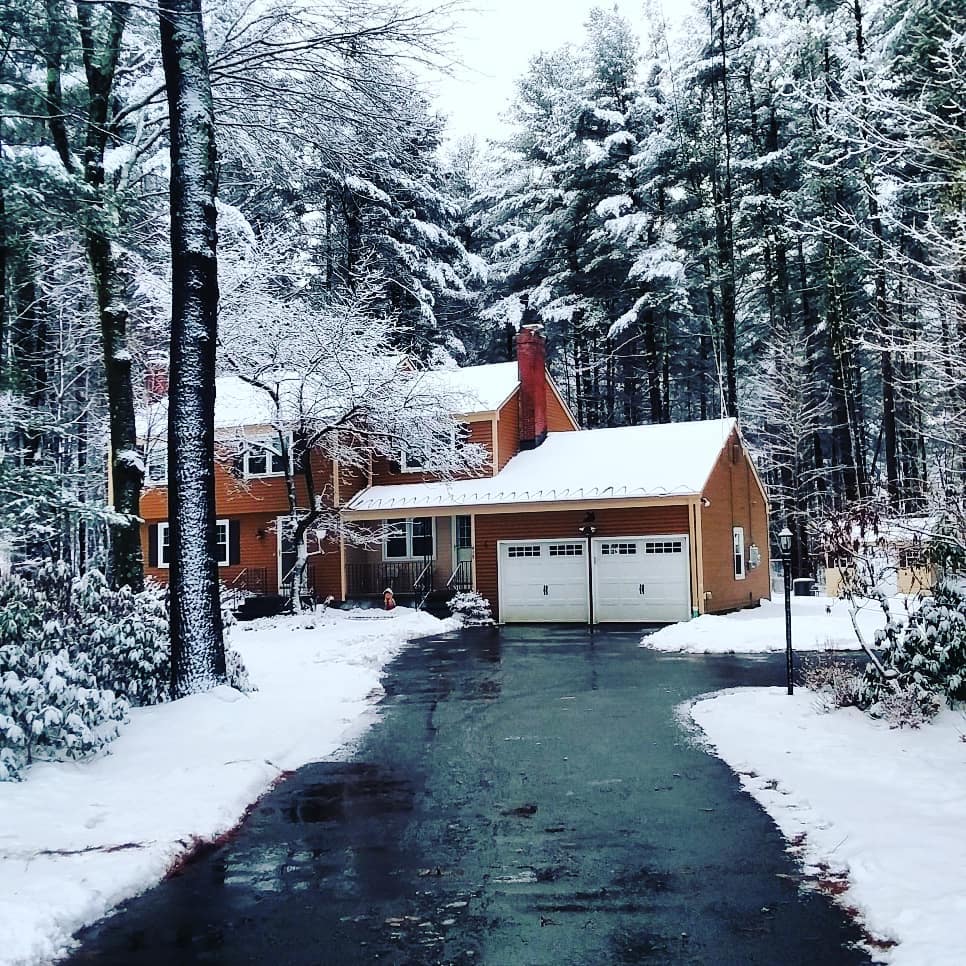
My father is speaking from the heart about his sister, Mary.  She meant a lot to him, and he is having trouble getting through his speech.  He wants everyone to know how much Mary changed people’s lives, how she would fight any injustice and how she hoped we would all follow in her footsteps.  Above all else, she had wanted the family to always stick together.

I find it hard to concentrate because I am staring over at Brett, wondering what he is thinking.  Is he sad?  Is he waiting for this moment to be over so that he can grieve alone?

Is he going to run back to the bottle?

I am jolted out of my reverie by silence.  My father is choked up and can’t continue.  Aunt Patricia and Uncle Tom walk over and put their arms around him.  Uncle Brett also walks over and puts his arms around them.  There is something going on that no one else in the room is privy too, certainly not distant cousins and in-laws, and clearly not I.  My grandfather is also shut out, but if he never saw this sibling camaraderie before then he wasn’t paying attention.

***********************************************
Even though he is a hairless Sasquatch, Uncle Tom was able to find a woman to marry him.  Her name is Aunt Fern, a saint with a big voice and a boisterous personality.

I met her at her father’s house in 1991 at a party intended for everyone in both families to get to know each other.  I played outside with her son from another marriage, Bobby, while the adults talked.

Later that night, we all played Scattergories.  If I remember correctly, that’s the game where a letter is picked and each team must come up with a list of people, places or things that begin with that letter.  Any two teams that select the same word don’t receive points for that entry, so the more clever the word choice the better.

I don’t remember who won.

I don’t remember the layout of the house, the color of the paint in the living room or the car Aunt Fern drove at the time.  I don’t remember Aunt Fern’s sister at all, but apparently she was there.  I don’t remember meeting Fern’s father, who passed away shortly after that party.

I do remember that during the game Uncle Brett stood up to argue every time he missed a point.  To insist that “Jermano” is a type of dog.  That there shouldn’t be a time limit.  To demand a restart.  For a new partner.

By the end of the night, all of the air had been sucked out of the room.

**********************************************

I could go on and on and on and on.  This is an old collection of slides that doesn’t quite line up properly, but the circle will be unbroken.

There are a few more things to add before it ends.

One, I really want to punch Uncle Brett in the face.  I could do it and he’d hit the floor, cold.  I’m not bragging, it’s just that he has wasted away to nothing.  Believe it or not, THE SIXTIES were kinder to Keith Richards.

Two, I really cannot punch Brett.  Ever.  I would be the outcast then.  The family would not forgive me.  Besides, I think my father has first dibs.

Three, I acknowledge that I should just let it go.

And one more:  I truly don’t hate THE SIXTIES or those who survived them.  Just the ones who couldn’t move on.

**********************************************

For the first time I can recall, my uncle is talking to me and he is coherent.  He isn’t soaked in booze.

“Just tell me.  What’s your problem with me?  What did I do?”

And then I let him have it.

Standard